
Mental Health in the Workplace Training for Employees
$239

Mental health training for employees: this 28-minute video teaches workers what mental health is, how to spot the warning signs that their own mental health is slipping, which parts of a job put pressure on it, how to keep workplace stress from following them home, and how to use self-care and the resources their employer already offers, such as an employee assistance program (EAP), to stay mentally healthy at work.
The average employee spends about one-third of their adult life on the job, more than 90,000 hours. Work can build purpose, confidence and friendships, or it can wear a person down. This program is written for the worker, not the manager: it puts the responsibility for a mentally healthy workplace on everyone in it, gives employees the words to raise a problem with a co-worker or supervisor, and shows them what they can do for themselves on a break, at their workstation and at home.
It pairs with our mental health training for managers and supervisors, which covers the leadership side: work design, the mental health safety plan, and how to talk with an employee who is struggling. Train the whole workforce with the employee program and the people who run it with the manager program. Sold as a DVD or USB kit with the quiz, sign-in sheet and certificate you need to document the session.
What the Employee Mental Health Training Covers
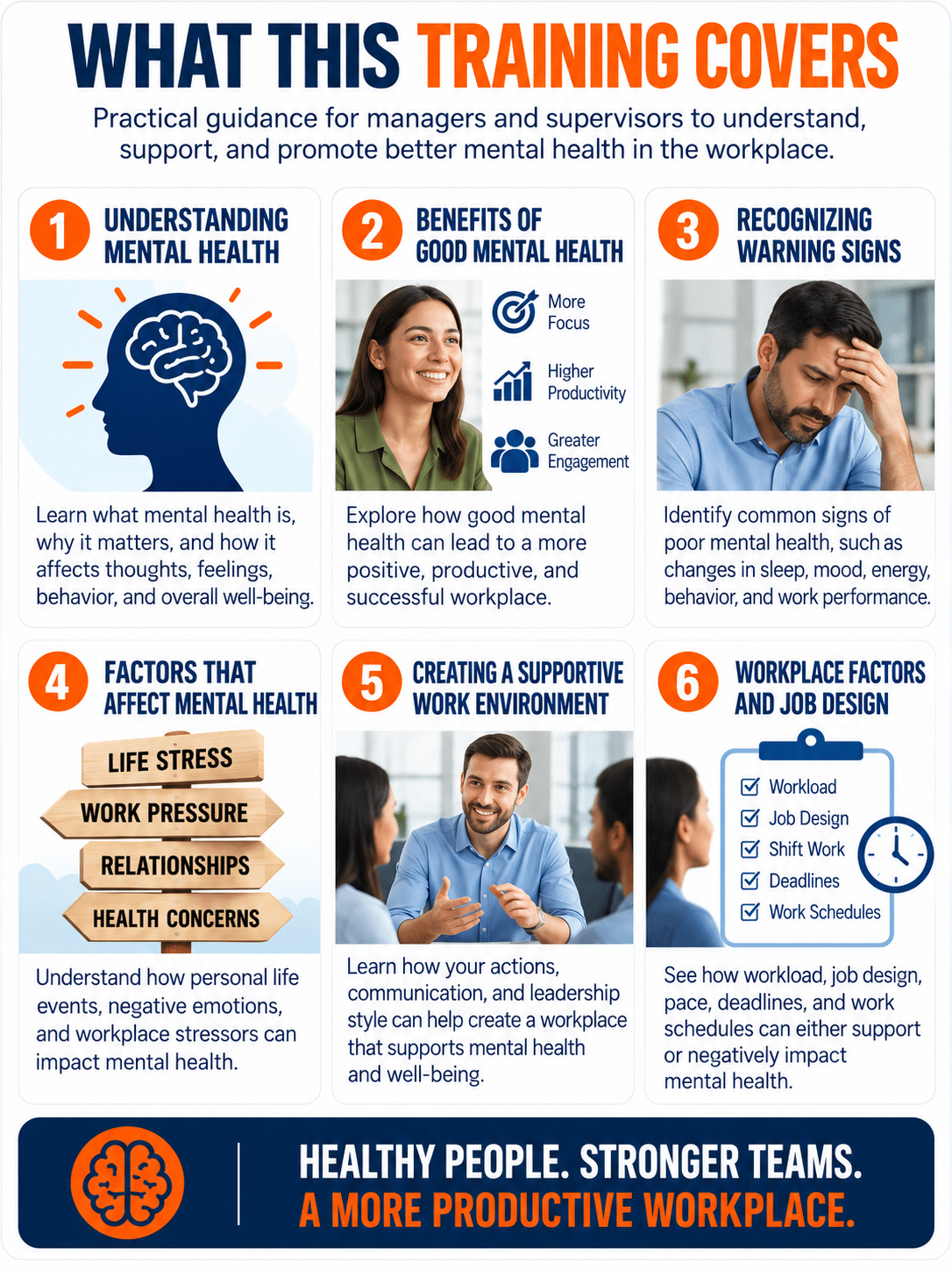
- What mental health is: emotional, psychological and social well-being, and how it shapes the way a person thinks, feels, acts, handles stress and relates to co-workers
- What mentally healthy people tend to have in common: optimism, self-esteem, confidence in new situations, goals, and the ability to recover from adversity, trauma and stress
- The personal-life events that can knock anyone off balance, including a death, a divorce, a substance use disorder or a dysfunctional family, and how workplace stress compounds them
- The warning signs to watch for in yourself: trouble sleeping, irritability, losing interest in things you enjoy, appetite changes, low energy, confusion, forgetfulness, mood swings and not being able to manage daily tasks
- What to do when the signs show up: mindfulness and meditation, exercise and nutrition, connecting with other people, and when to contact a medical professional
- The two things every employee can do daily to keep the workplace mentally healthy: recognize when words or actions are affecting you or a co-worker, and raise it with the person, then with a supervisor if needed, with a suggested solution in hand
- Workplace factors that put pressure on mental health: work content and design, workload and pace, shift work and unpredictable schedules, and a physical environment with poor lighting, high noise, limited space or badly maintained equipment
- The less visible pressures: little say in decisions that affect your job, unclear responsibilities, being made responsible for co-workers outside your role, pay and promotion concerns, no path for growth and no job security
- How company culture, poor communication, a lack of support from managers, strained co-worker relationships, bullying and harassment, and work-home conflicts all affect how you feel at work
More Topics in the Mental Health in the Workplace Video
- Why a little stress at work can energize you and help you focus, and the point at which it becomes a threat to physical and mental health
- The common causes of workplace stress: customer, patient and co-worker interactions, learning new tasks, added responsibility, low pay, excessive workload, no control over decisions, conflicting demands and unclear expectations
- What continual stress does to the body and mind: anxiety, memory problems, depression, headaches, stomach aches, high blood pressure and heart disease, and the unhealthy ways people cope with it
- Setting work-life boundaries: leaving work at work, not checking email from home, and protecting personal time so it actually restores you
- Recharging away from work with meditation, deep breathing and mindfulness, and when it is appropriate to take a mental health day
- What to do when you cannot get time off: stepping away for a snack or a short walk, or deep breathing at your workstation when you cannot leave it
- OSHA’s workplace stress resources: the causes and consequences of stress, its signs and symptoms, and where to find information on workers’ rights and how to file a complaint
- Self-care as a daily practice: healthy sleep, exercise, time with people you love, and how to practice it during the workday with nutritious snacks, fresh air, light stretching and conversation with co-workers
- Mindfulness at work: focusing on the present task to regain concentration, meditating on breaks, and using deep breathing to block distractions
- Mental health apps: guided meditation and breathing exercises, and apps that connect you with a mental health provider by video or messaging
- Employee assistance programs: what an EAP is, the free and confidential assessments, short-term counseling and referrals it can provide, and why you can use it for problems that have nothing to do with work
- Other resources your company may offer, such as seminars, workshops, brochures and videos, and how to ask your manager or supervisor what is available
What’s Included in the Employee Mental Health Training Kit:
- Full-length Mental Health in the Workplace training video for employees (28:00, English)
- Employee quiz and answer sheet
- A “Presenter’s Guide” if you are going to do this training in person
- A printable training sign-in sheet to keep track of your training program
- A printable Certificate of Completion. You can print as many copies of the Certificate as you need
How You Can Deliver the Training
The kit ships on DVD or USB stick. Play the video at a safety meeting, during new-hire orientation or as an all-hands session, hand out the quiz, and file the answer sheet, sign-in sheet and certificate with your training records. Everything in the kit can be reused for every new employee and every annual refresher. If you would rather assign the course online with automatic completion tracking, this program is also in our online safety training library of 250+ courses.
Mental Health in the Workplace Training Video for Employees – Full Length Preview:
Mental Health Training Requirements for Employees
Does OSHA Require Mental Health Training?
There is no OSHA standard that requires an employer to train employees on mental health, and no federal rule that sets a topic list or a frequency. What does apply is the General Duty Clause, Section 5(a)(1) of the OSH Act, which requires every employer to provide a workplace free from recognized hazards that are causing or are likely to cause death or serious physical harm. OSHA treats workplace stress as a recognized hazard and maintains a Workplace Stress resource page for employers and workers, which this video points employees to. NIOSH’s Total Worker Health program covers the same ground from the research side.
This kit supports an employer’s effort to address workplace stress and mental health under the General Duty Clause and gives you the quiz, sign-in sheet and certificate to document that the training happened. It is an awareness program for employees; it does not diagnose anyone, it is not counseling, and it does not replace an EAP or a medical professional. Employees who have a mental health condition also have rights under the Americans with Disabilities Act; the EEOC’s guidance on mental health conditions in the workplace explains them, and the manager program covers the employer’s side of accommodation.
Who Needs This Training
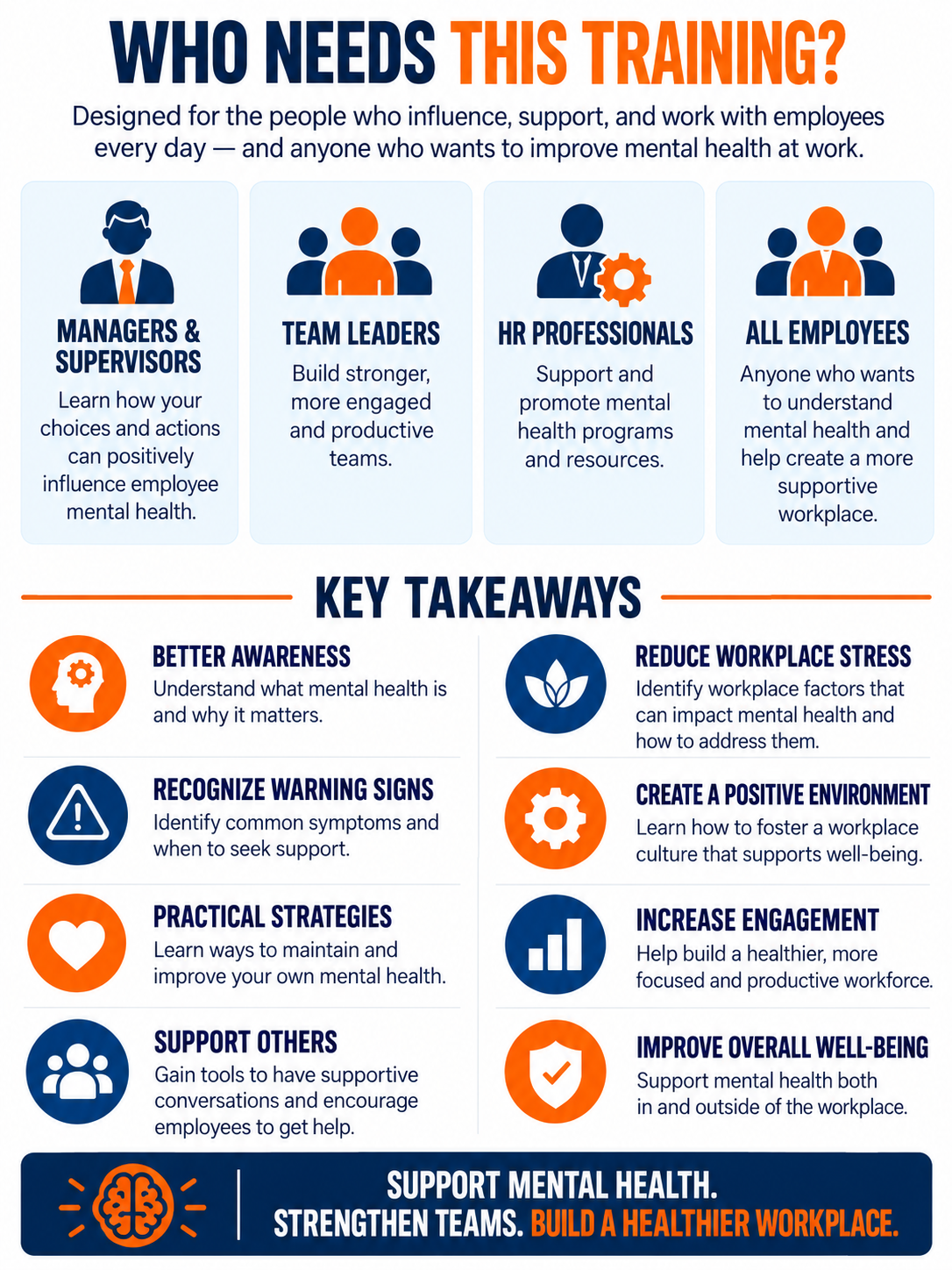
- Every employee, in every industry: the program is written for the worker at any level and does not assume a desk job
- New hires, as part of orientation, so they know what the company offers before they need it
- Shift workers, night-shift crews and people who work alone for long stretches, who the video singles out as being under extra pressure
- Employees in high-stress, customer-facing or patient-facing roles
- Workforces going through a reorganization, layoffs, a merger or a change in schedule or pace
How Often to Train
No regulation sets an interval. The schedule most employers use:
- On hire, during orientation
- Once a year as a refresher, which is what the quiz and presenter’s guide are built for; May (Mental Health Awareness Month) is a common slot
- After a major workplace change: a reorganization, layoffs, a new shift pattern, a return-to-office move
- After a critical incident on site, alongside any counseling the EAP provides
Which Version Do You Need?
This is the employee version. Give it to the people who do the work. The managers and supervisors version is a separate 26-minute program on the leadership side: how a boss affects a team’s mental health, how to redesign work and build a mental health safety plan, how to approach an employee who is struggling, and how to refer someone to the EAP without playing therapist. For the stress topic on its own, our workplace stress training video goes deeper on causes and coping techniques, and our fitness and wellness training covers the physical-health side this program touches on. If the pressure is coming from how people treat each other, see our workplace bullying training. All of our people-side programs are in the Human Resources category.
FAQs on Mental Health Training for Employees
Answered by our in-house OSHA Authorized Trainer – Jason Hessom

Have a question for us? Call us at 800-859-1870 or Contact Us Via Email
This program teaches employees what mental health is, the warning signs that theirs is slipping, the parts of a job that put pressure on it, how workplace stress affects the body and mind, how to set work-life boundaries, how to practice self-care on and off the clock, and how to use company resources such as an employee assistance program. It runs 28 minutes and comes with a quiz, answer sheet, presenter’s guide, sign-in sheet and certificate.
No OSHA standard requires it. The General Duty Clause, Section 5(a)(1) of the OSH Act, requires employers to keep the workplace free from recognized hazards, and OSHA treats workplace stress as one, with its own resource page. This program supports that obligation and documents the training; it does not claim to meet a specific standard because there is none.
The employee version is written to the worker: your own warning signs, the workplace factors that affect you, your responsibility to speak up, self-care and the resources you can use. The manager version is written to the person running the team: how a supervisor’s behavior affects employee mental health, how to change work design and schedules, building a mental health safety plan, how to approach an employee who is struggling, how to refer to the EAP and set an action plan, and how a leader protects their own mental health. They are two different scripts, not one video with a different title.
No. It teaches employees to recognize warning signs in themselves, to raise problems with the people involved and with a supervisor when needed, and to use the professional resources their employer offers. It makes clear that persistent symptoms belong with a medical professional, not a co-worker.
Stress is one section of it, not the whole program. The video covers what stress does to the body and mind, work-life boundaries and coping techniques, then moves on to self-care, mindfulness and employer resources. If you want a program devoted to stress alone, our workplace stress training video is the deeper one.
A 28-minute English video on DVD or USB stick, plus the trainee quiz and answer sheet, a presenter’s guide, an employee sign-in sheet and a Certificate of Completion that is editable (name and date) and reusable for every employee. The same program is available in our online training library.
Yes. It is an awareness program written for employees at every level, so an all-hands meeting, a safety meeting or an orientation class all work. Use the presenter’s guide to run the discussion, the quiz to confirm understanding, and the sign-in sheet and certificate to document who attended.


Reviews
There are no reviews yet