

Workplace Harassment Training for Employees – [Video Kit]
$239
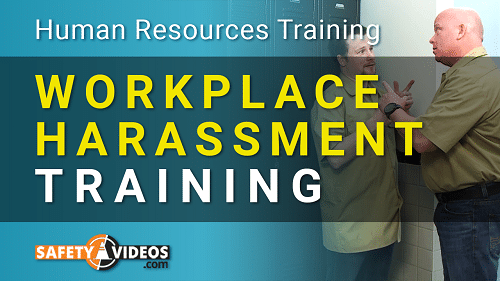
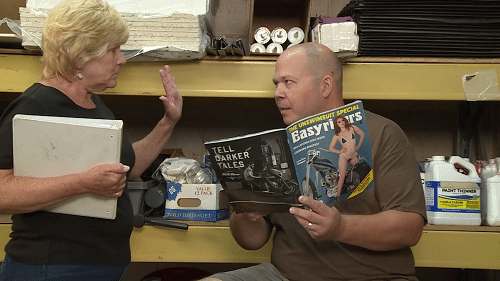
Workplace harassment is any unwelcome conduct, verbal or physical, aimed at an employee because of who they are: their race, color, religion, sex, national origin, age, disability or another protected characteristic. It also includes the bullying, hostile remarks and intimidation that poison a crew long before anyone files a complaint. This Workplace Harassment Training video kit is the general-industry anti-harassment program for every employee in any facility. It covers every form of harassment, with sexual harassment as one chapter rather than the whole subject, and it was filmed in an industrial setting so production, warehouse and shop crews see their own workplace on screen.
In about 14 minutes it shows employees what harassment looks like on the floor and in the break room, why it is a form of discrimination, what it does to everyone around it, and what to do when they see it or experience it. The kit adds the quiz, answer sheet, sign-in sheet, presenter’s guide and reusable completion certificate that turn a video into documented training.
This Workplace Harassment Training Covers the Following Topics With Your Employees:
- What workplace harassment is, and how employees can recognize it and stop it in its tracks: verbal abuse (hurtful or disturbing remarks) and physical abuse (horseplay, unwanted touching)
- How to spot inappropriate behavior by co-workers before it becomes a pattern
- How workplace harassment is defined: unwelcome or offensive words or actions that make a workplace feel hostile or abusive to an employee
- How harassment affects everyone, not only the person targeted: a tense, toxic environment that drives down morale and productivity across the whole facility
- What workplace violence is and how it can be avoided
- Why workplace harassment is a form of discrimination when it targets race, color, religion, sex or national origin
Anti-Harassment Training Concepts Every Employee Learns:
- How a workplace harassment program intersects with your diversity training
- The forms harassment takes: mocking someone’s age, ethnicity or other characteristic, sexual harassment (a subject large enough for its own course), and more
- Why the key to stopping harassment is ending it immediately, and how the video answers the fears that keep employees quiet: “getting involved,” “being a tattletale,” getting a co-worker “in trouble”
- When workplace harassment becomes workplace violence, and how to deal with a co-worker who becomes agitated or physically aggressive
- and much more
Harassment is an impediment to your employees and to your business, and the time to address it is before it starts. Every employee who watches this program leaves knowing what crosses the line, why it matters to the whole crew, and that reporting it is expected.
This Complete Workplace Harassment Training Kit Includes:
- Full-length Workplace Harassment Training video (about 14 minutes)
- Employee quiz and answer sheet
- A “Presenter’s Guide” if you are going to lead this training in person
- A printable training sign-in sheet to keep track of your training program
- A printable Certificate of Completion you can edit with each employee’s name and date and reuse for every employee you train
Workplace Harassment Training Delivery Options:
Choose the DVD or the USB stick. The English and Spanish versions are sold separately, so order the language your crew speaks. The same program is also included in our online safety training subscription, which streams the full 250+ course library for teams that would rather train on a schedule than from a disc.
Workplace Harassment Training Video – Full Length Preview:
Is Workplace Harassment Training Required?
What Federal Law Says
No OSHA standard requires harassment training. OSHA’s rules cover physical hazards, and OSHA reaches workplace violence only through the General Duty Clause. Harassment is governed by federal civil-rights law: Title VII of the Civil Rights Act of 1964 makes harassment based on race, color, religion, sex or national origin a form of illegal discrimination, and the ADA, the ADEA and GINA extend that to disability, age and genetic information. The EEOC’s harassment guidance does not mandate training, but it names regular, comprehensive training as one feature of an effective anti-harassment program, alongside a clear policy and a working complaint process. That matters in court: under the Supreme Court’s Faragher and Ellerth decisions, an employer’s defense to a harassment claim rests on showing it took reasonable care to prevent and correct harassment, and documented training is the usual evidence.
Which States Require Harassment Training
A growing list of states and cities require employers to train employees, and several require a separate, longer session for supervisors:
- California: employers with 5 or more employees; one hour for nonsupervisory employees and two hours for supervisors, every two years and within six months of hire or promotion (Gov. Code § 12950.1)
- New York: every employer, annual interactive training that meets the state model (Labor Law § 201-g); New York City adds its own requirements for employers with 15 or more employees
- Illinois: every employer, annual training on the state model (775 ILCS 5/2-109), with additional content for restaurants and bars
- Connecticut: employers with 3 or more employees; two hours for every employee within six months of hire (Gen. Stat. § 46a-54)
- Delaware: employers with 50 or more employees; within one year of hire and every two years, with additional supervisor training (19 Del. C. § 711A)
- Maine: employers with 15 or more employees; within one year of hire, with additional supervisor training (26 M.R.S. § 807)
- Washington: hotels, motels, retail, security and property-services employers (RCW 49.60.515)
- Chicago: annual training for every employee plus bystander training, with a longer session for supervisors (Chicago Human Rights Ordinance)
Most of these laws are written around sexual harassment and require the training to cover the other protected characteristics as well. Requirements change; check your state’s current rule before you schedule.
Who Needs Workplace Harassment Training
- Every employee, at hire and on a regular refresher cycle, in every state, because the federal defense depends on it whether or not your state mandates it
- Employees in the mandate states above, on that state’s schedule, with this kit as the video component of the session
- Production, warehouse, shop and field crews who rarely sit at a computer, where a short video at a crew meeting is the practical way to train everyone
- Spanish-speaking workers, using the Spanish version so the training is understood rather than merely delivered
- Managers and supervisors, who also need the manager-specific course listed below, because they carry legal duties this video does not cover
- Any workplace after a complaint, an investigation or a policy update, so everyone has seen the same material
How Often to Repeat It
Federal law sets no interval. The mandate states run from annually (New York, Illinois, Chicago) to every two years (California, Delaware). For everyone else, training at hire, a yearly refresher at a crew meeting, and a repeat after any incident or policy change is consistent with the EEOC’s call for regular training and gives you a dated record for every employee.
How This Kit Fits a State Requirement
This kit supports the training element of those laws; it does not replace them. The video runs about 14 minutes, so where a state sets a minimum length or requires an interactive session (California’s one and two hours, Connecticut’s two hours) it is the core of a longer, instructor-led session: the presenter’s guide gives the leader the discussion points, the quiz makes it interactive, and the sign-in sheet and certificate make it documented. Where your state sets content requirements, read them against the topics list above and add your own policy and complaint procedure to the session.
Which Harassment Training Video Do You Need?
This general-industry kit is the right choice for most crews. Use the others when the audience or the subject is more specific:
- Office staff: Harassment Training for Office Workers, the same program filmed in an office setting
- Sexual harassment as the whole subject: Sexual Harassment Training for Employees
- Managers and supervisors: harassment training for managers and supervisors, which covers the supervisor’s duty to act, complaint handling and retaliation
- Bullying that is not tied to a protected characteristic: Workplace Bullying Training
- Discrimination beyond harassment: Discrimination Training for Employees and Manager Discrimination Training
FAQs on Workplace Harassment Training
Answered by our in-house OSHA Authorized Trainer – Jason Hessom

Have a question for us? Call us at 800-859-1870 or Contact Us Via Email
At minimum: a plain definition of harassment with examples employees will recognize, the protected characteristics under federal and state law, the difference between rudeness and harassment, how harassment affects the whole crew, how and to whom to report it, and the assurance that reporting is expected and protected. This video covers each of those in about 14 minutes; your session adds your own policy, your complaint procedure and any state-specific items your law requires.
No federal law or OSHA standard makes it mandatory. Title VII and the other civil-rights statutes make harassment illegal, and the EEOC and the courts treat regular training as the evidence that an employer took reasonable care to prevent it. Several states and cities do mandate it, with California, New York, Illinois, Connecticut, Delaware and Maine among them; see the list above.
The video runs about 14 minutes. With the quiz and a short discussion of your policy, most crews finish in 30 to 45 minutes. In states that set a minimum length, such as California’s one hour for employees and two for supervisors, the video is the core of a longer instructor-led session rather than the whole session.
The law recognizes two: quid pro quo, where a job benefit is tied to submitting to unwelcome conduct, and hostile work environment, where unwelcome conduct is severe or pervasive enough to make the workplace intimidating or abusive. Either can be based on race, color, religion, sex, national origin, age, disability or genetic information, and either can be verbal, physical or visual.
A workplace where unwelcome conduct based on a protected characteristic is frequent or severe enough that a reasonable person would find it intimidating, hostile or abusive. One off-color remark rarely qualifies; a pattern of them does. The conduct does not have to be aimed at the person who complains, and it does not have to come from a supervisor.
Tell the person to stop if it is safe to do so, write down what happened with dates and witnesses, and report it through the channel in your company’s policy: a supervisor, HR or the designated contact. Federal law prohibits retaliation for reporting in good faith, and an employee who is not satisfied with the response can file a charge with the EEOC or their state agency. The video walks employees through the reporting step and the reasons not to stay silent.
Sexual harassment is one of the forms covered, alongside harassment based on race, religion, age, ethnicity and other characteristics. If your state mandate or your policy calls for a dedicated sexual harassment course, use our Sexual Harassment Training for Employees; for supervisors, the manager version.
Yes. The English and Spanish versions are sold separately on DVD or USB stick, and the program is included in our online safety training subscription. Every kit includes the quiz, answer sheet, presenter’s guide, sign-in sheet and a Certificate of Completion you can edit with each employee’s name and date and reuse for everyone you train.
18 reviews for Workplace Harassment Training for Employees – [Video Kit]
![Workplace Harassment Training for Employees - [Video Kit]](https://www.safetyvideos.com/wp-content/uploads/2022/02/products-90-2-150x150.png.webp)


![California Workplace Violence Training - [Complete Video Kit]](https://www.safetyvideos.com/wp-content/uploads/2024/08/California-Workplace-Violence-Preview.png.webp)
Got the message across in a timeframe I could get people to actually do!
Gives a great general overview of workplace harassment
A must-have for every company.
Our team thought it was good so thumbs up from us
Our HR Director got this for our staff. Time well spent going through this with them!