Workplace Safety Audit Training – [Complete Video Package]
$239
Most employees treat a safety audit as something that happens to them — an inspection to survive, not a process to actively support. That’s a missed opportunity, and sometimes a dangerous one.
A safety audit is only as effective as the information it surfaces. When employees don’t know what to look for, can’t identify the hazards in their own work area, or fail to report near-misses because they seem minor, the audit team is working with incomplete data. Problems persist. Accidents happen.
This training program changes that dynamic. It explains what a safety audit is, why it matters, and — critically — what every employee can do to make one more effective. From conducting a self-inspection of their work area to knowing when and how to report an incident, trained employees become active participants in the process rather than passive bystanders.
WHAT EMPLOYEES WILL LEARN:
- Understand what a safety audit is, what it evaluates, and why it’s conducted — including both internal and third-party audits
- Recognize the three core types of safety audits: hazard identification, regulatory compliance, and overall program effectiveness
- Identify common physical hazards during a workplace analysis — cluttered pathways, damaged flooring, inadequate lighting, and unsafe equipment
- Understand OSHA’s hierarchy of controls — elimination, substitution, engineering controls, administrative controls, and PPE — and how each type functions
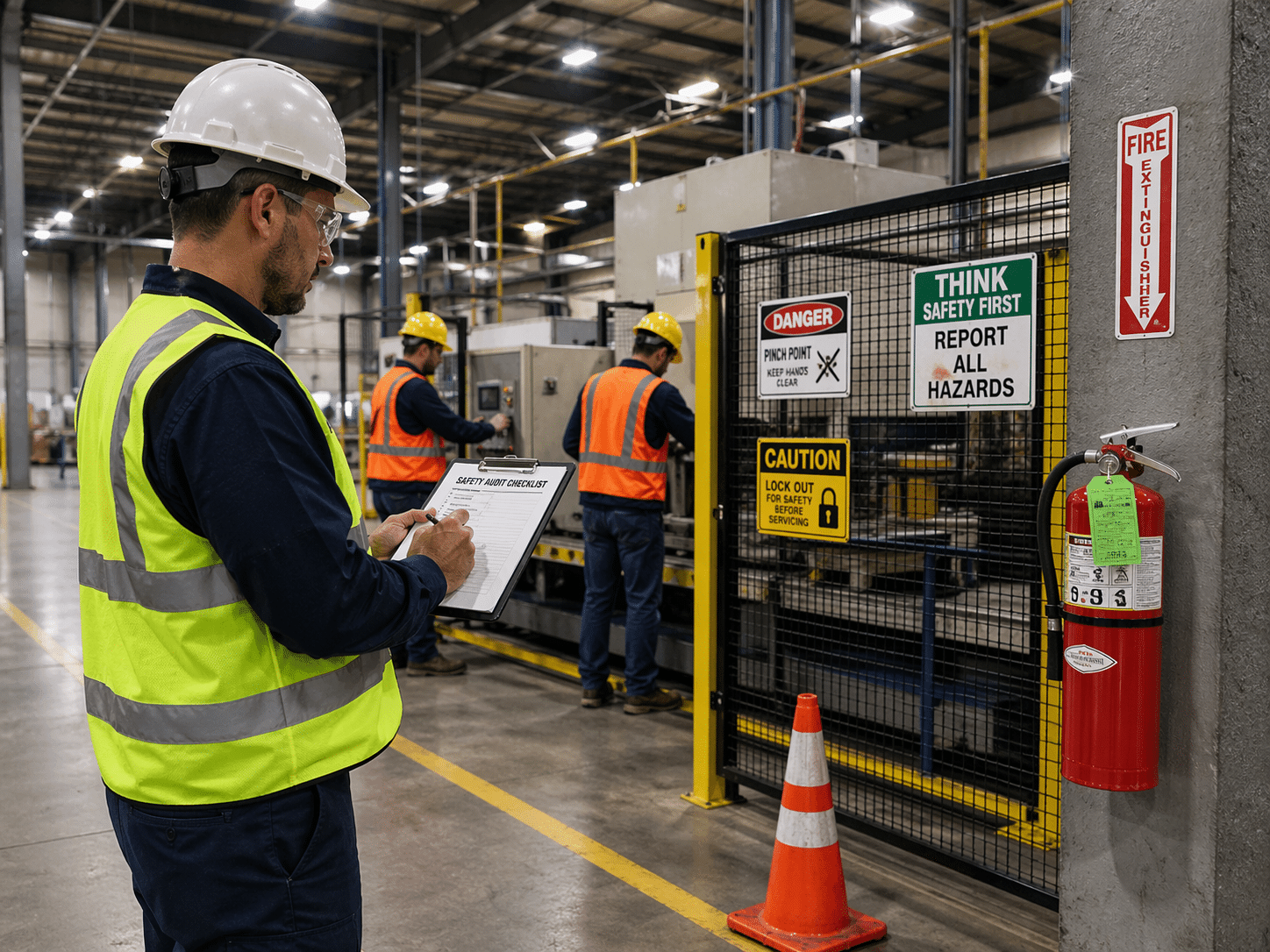
- Inspect their own work area and equipment for damage, ergonomic issues, and potential hazards before or during an audit
- Conduct a personal safety audit to assess their own awareness of emergency procedures, exit locations, and safety equipment
- Know what to do when an accident or near-miss occurs — including how to document, report, and support an incident investigation
COURSE TOPICS:
What a Safety Audit Is and Why It Matters The program opens by establishing what a safety audit actually accomplishes. Employees learn that an audit is a systematic review designed to identify hazards, evaluate compliance with OSHA regulations, and assess the overall effectiveness of a workplace safety program — not just a box-checking exercise. Whether conducted by an internal team or an outside firm, the goal is the same: find problems before they become accidents.
Workplace Analysis A workplace analysis is the investigative core of any audit. Employees learn what auditors examine during a physical inspection — work area layout, tool and equipment condition, ergonomic factors, and the presence of hazardous materials. They also learn why their own knowledge is valuable to this process: no auditor knows a specific job better than the person doing it. Employees may be asked to inspect their own areas, answer questions about their work practices, and flag anything that doesn’t look right.
Systems of Controls This section walks employees through OSHA’s hierarchy of controls in plain language. Starting with the most effective — hazard elimination — and working through substitution, engineering controls, administrative controls, and PPE, employees learn not just what each control type is, but how they work together as a system. Understanding the hierarchy helps employees recognize why certain procedures exist and why PPE, while essential, is the last line of defense rather than the first.
Conducting Your Own Work Area Inspection Employees learn a structured approach to inspecting their own space as part of an audit. This includes checking that pathways are clear and accessible — including routes to safety showers, eyewash stations, fire extinguishers, and emergency exits — verifying equipment condition, and assessing workstation ergonomics. The program also emphasizes the importance of knowing hazardous materials in the area and having access to current Safety Data Sheets.
Personal Safety Audit Beyond the physical environment, employees are prompted to honestly evaluate their own readiness. Do they know their company’s standard operating procedures? Can they locate emergency exits in low visibility? Do they know where the nearest first aid kit is and what type of fire extinguisher to use in different situations? This self-assessment component reinforces that safety compliance is an individual responsibility, not just an organizational one.
Incident Reporting and Emergency Response The final section covers what employees should do when accidents or near-misses occur. Employees learn that every incident — no matter how minor it seems — needs to be reported and documented so an investigation can begin. The program explains the reporting chain, the importance of witness accounts, and why near-misses are just as worth documenting as injuries. Unreported incidents are unresolved hazards.
WHY THIS TRAINING MATTERS:
OSHA requires employers to identify and correct workplace hazards — but enforcement depends heavily on employees who can recognize problems and report them accurately. Organizations with trained, audit-aware workforces catch more hazards earlier, produce more accurate incident documentation, and build the institutional knowledge that keeps safety programs improving year over year. This training turns compliance from a top-down process into a shared responsibility.
WHO NEEDS THIS TRAINING:
Any employee who works in an environment subject to regular safety inspections or OSHA compliance requirements, including workers in:
- Manufacturing and industrial facilities
- Warehousing and distribution
- Construction and skilled trades
- Chemical processing and laboratories
- Healthcare and institutional facilities
- Any general industry workplace with active safety programs
This Safety Audit training can benefit your whole facility. It can teach managers the importance of safety inspections, employees how to remain aware of their actions, and the importance of keeping a safe and clean work area. Available in an English or Spanish language option and in either DVD or USB format. The training is 17 minutes in length.
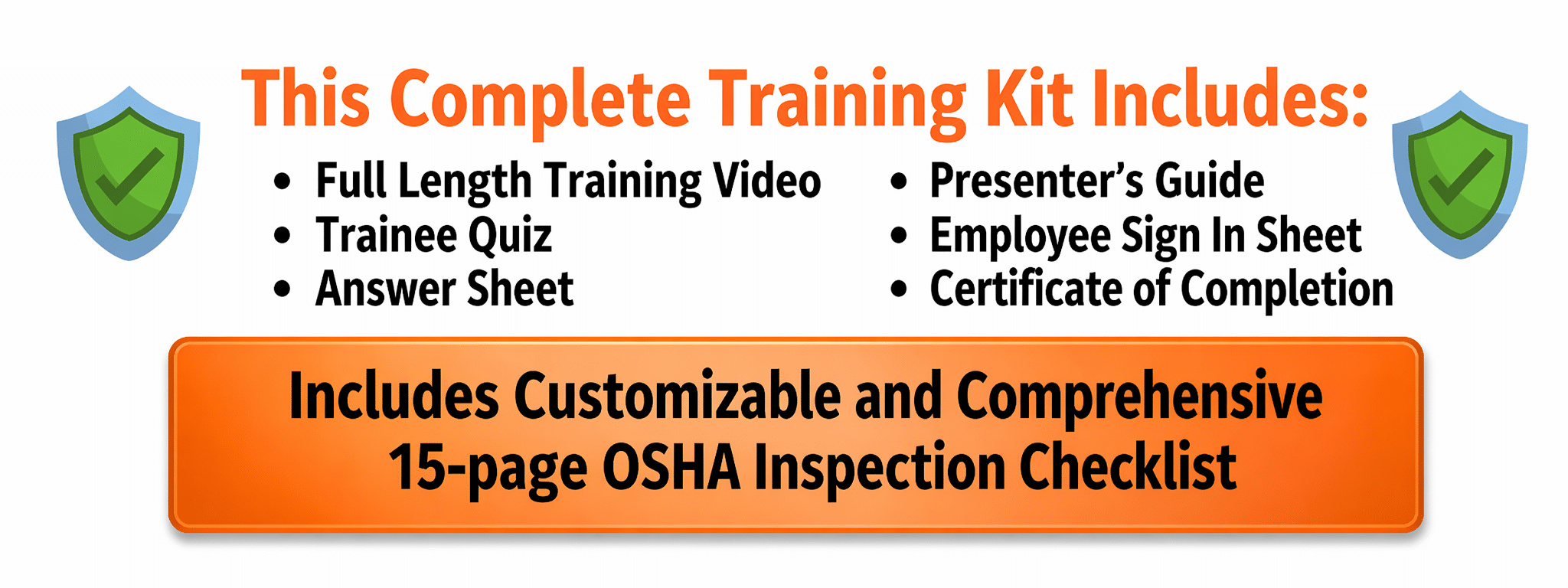
This Complete Workplace Safety Audits Training Program Includes These Items:
- Full-length Workplace Safety Audits training video
- Employee quiz and answer sheet
- A “Presenter’s Guide” if you are going to do this training in person
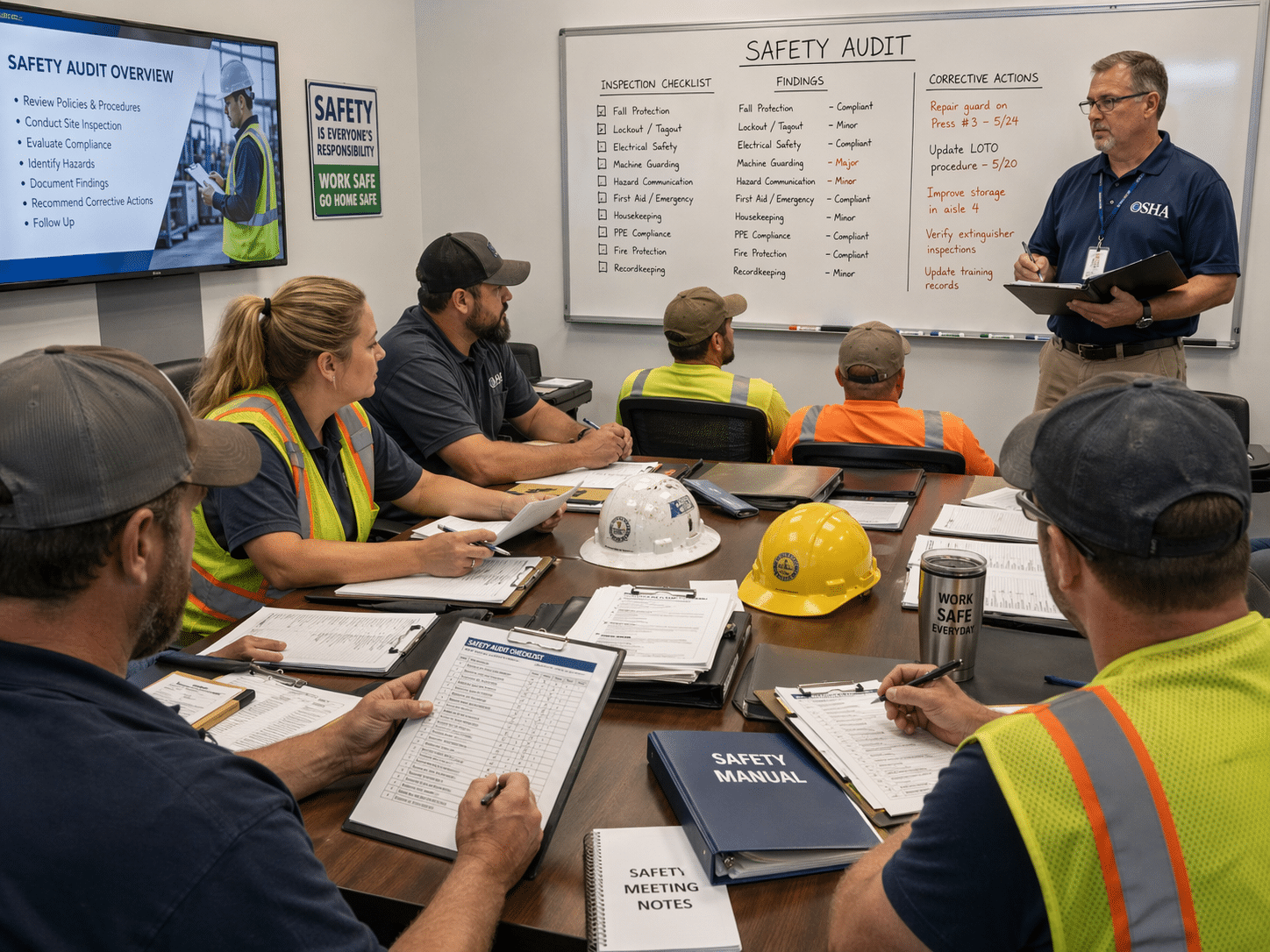
- A comprehensive (and customizable) OSHA Safety Audit checklist – 15 pages, 142 topics, with a “Corrective Action Tracker.”
- A printable training sign-in sheet to keep track of your training program
- A printable Certificate of Completion. You can print as many copies of the Certificate as you need
Safety Audit Training Video – Full Length Preview:
FAQs on Workplace Safety Audits
Answered by our in-house OSHA Authorized Trainer – Jason Hessom

Have a question for us? Call us at 800-859-1870 or Contact Us Via Email
Yes. The program covers OSHA’s hierarchy of controls and the core elements that regulators evaluate during a compliance inspection. It’s designed to help employees understand both their rights and their responsibilities under OSHA regulations, and to actively support — rather than simply endure — the audit process.
There are no per-seat fees. One purchase covers your entire organization, whether you’re training a single shift or your entire workforce across multiple locations.
The quiz assesses comprehension of the key concepts from the video — types of safety audits, the hierarchy of controls, proper inspection practices, hazard reporting, and emergency response procedures. Completed quizzes provide documentation that training was delivered and understood, which can support your internal audit records.
Absolutely. This program is well-suited as a foundational course that pairs with topic-specific training on subjects like hazard communication, lockout/tagout, PPE use, or emergency response. It establishes the framework employees need to understand how those topic-specific trainings connect to your overall safety program.
Get our comprehensive 142-item OSHA General Industry Safety Audit Checklist — free with your purchase of the Safety Audits Training Video. Covering 12 critical topic areas from Hazard Communication to Confined Space, this professionally formatted, print-ready checklist gives your team everything they need to conduct a thorough, OSHA-compliant facility inspection from day one.
26 reviews for Workplace Safety Audit Training – [Complete Video Package]
![Workplace Safety Audit Training - [Complete Video Package]](https://www.safetyvideos.com/wp-content/uploads/2022/02/products-29-2-150x150.png.webp)


Helped our team understand what auditors actually look for.
Good explanation of engineering controls, administrative controls, and PPE as layers of protection. Well structured.
Good explanation of the hierarchy of controls. Easy to follow.
Employees learned how to identify hazards in their own work areas instead of waiting for an auditor.
Very helpful for OSHA compliance.