
Hand and Power Tool Safety Training – [Complete Video Kit]
$239

This hand and power tool safety training video is a 16-minute program for general industry and manufacturing crews. It teaches employees how to inspect a tool before every use, why guards stay on, which PPE each job calls for, how to handle cords and grounding, how to prevent kickback, and how the plain hand tools (hammers, chisels, screwdrivers, wrenches) cause the injuries nobody expects.
It is written for anyone you hand a drill, grinder, saw, nailer or hammer to: maintenance, production, fabrication, carpentry, facilities and warehouse staff. The kit supports the employer’s duty under 29 CFR 1910.242(a) to keep every tool in safe condition, including tools employees bring from home, and gives you the quiz, sign-in sheet and certificate to document the training. Sold as a DVD or USB kit in English or Spanish.
What the Hand and Power Tool Safety Training Video Covers
- The hazards and injuries a power tool can cause (abrasions, bruises, burns, lacerations, punctures, eye injuries, amputations and broken bones)
- The hazards of unpowered hand tools (a screwdriver that punctures a hand, a hammer that crushes fingers)
- Best practices to keep in mind while using power or hand tools
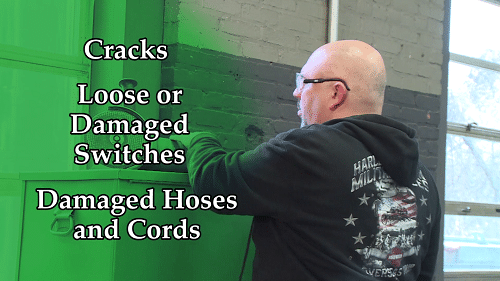
- How to inspect power tools before use and what to look for (cracked or bent pieces, rust or corrosion, loose or missing parts)
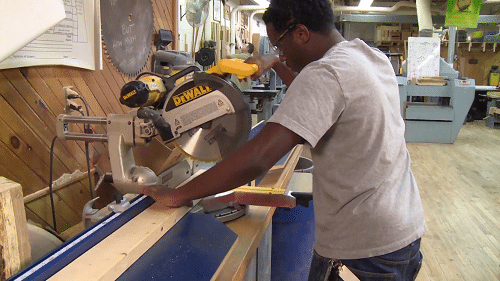
- How to inspect power saws before use (saw guards present and working properly)
- What to do with a tool that has missing or broken parts
- How to properly care for tools
Additional Power Tool Safety Topics in This Video
- The personal protective equipment to use with a power tool (eye and ear protection, respirators and safety glasses, depending on the job)
- The extra PPE that grinding, cutting and sanding call for
- Electrical considerations while using power tools (standing in water, frayed cords, improper grounding, extension cords)
- What kickback is and how to prevent it (clamp the material, let the tool reach full speed before the cut, change direction gradually)
- Special considerations for power tools around flammable or combustible materials
What Is in the Hand and Power Tool Safety Training Kit
- Full-length hand and power tool safety training video (16 minutes, English or Spanish)
- Employee quiz and answer sheet
- A “Presenter’s Guide” if you are going to do this training in person
- PowerPoint Presentation on Hand and Power Tool Safety (12 Slides – Customizable)
- A printable training sign-in sheet to keep track of your training program
- A printable Certificate of Completion, editable (name and date) and reusable for every session
- “Talking Points” document for the presenter on the PowerPoint content
How You Can Deliver the Training
The kit ships on DVD or USB stick in English or Spanish (each language is a separate kit). Play the 16-minute video in a classroom, a toolbox meeting or one-on-one, hand out the quiz, and file the answer sheet, sign-in sheet and certificate with each employee’s training record. Everything in the kit can be reused for every new hire and every refresher. If you would rather assign the course online with automatic completion tracking, this program is also part of our online safety training library of 250+ courses. Construction crews working under 29 CFR 1926 have their own version: the construction hand and power tool safety training kit.
Hand and Power Tool Safety Video – Full Length Preview:
Hand and Power Tool Safety Requirements
What OSHA Requires
OSHA’s hand and portable powered tool rules for general industry are in 29 CFR 1910 Subpart P. 1910.242(a) makes the employer responsible for the safe condition of every tool and piece of equipment employees use, including tools the employees furnish themselves, and 1910.242(b) limits compressed air used for cleaning to less than 30 psi with chip guarding and PPE. 1910.243 sets the guarding rules for portable powered tools: guards above and below the base plate on portable circular saws with blades larger than 2 inches, and a constant-pressure switch that shuts the tool off when released on drills, grinders, sanders, reciprocating and jig saws and similar tools. On construction sites the same ground is covered by 29 CFR 1926 Subpart I (1926.300 through 1926.307).
Subpart P does not set a training standard or a retraining interval of its own. The training obligation comes from the standards around it: 1910.132(f) requires training on the PPE each tool calls for, 1926.21(b)(2) requires construction employers to instruct each employee in recognizing and avoiding unsafe conditions, and the General Duty Clause covers the rest. This kit supports those requirements; it is not an OSHA certification and no such certification exists for hand or power tools.
Who Needs Hand and Power Tool Safety Training
- Maintenance, production and fabrication employees who use drills, grinders, saws, sanders and nailers
- Carpentry, facilities and warehouse staff who use hand tools daily
- New hires, in the first week, before they are handed a power tool
- Any crew after a tool-related injury or near miss
- Temporary and seasonal workers who bring their own tools
How Often to Retrain
OSHA sets no fixed interval for hand and power tool training. Retrain when one of these happens:
- A new tool, a new model or a new task is introduced
- An injury, a near miss or a damaged guard is found
- An employee is observed using a tool without its guard or the required PPE
- Once a year as a refresher, which is the common practice and what the presenter’s guide is built for
FAQs on Hand and Power Tool Safety Training
Answered by our in-house OSHA Authorized Trainer – Jason Hessom

Have a question for us? Call us at 800-859-1870 or Contact Us Via Email
For general industry the rules are in 29 CFR 1910 Subpart P. 1910.242 makes the employer responsible for the safe condition of every tool employees use, including tools they bring from home, and limits compressed air used for cleaning to less than 30 psi. 1910.243 requires guards on portable powered tools, such as guards above and below the base plate on circular saws with blades larger than 2 inches and constant-pressure switches on drills, grinders and sanders. Construction sites follow 29 CFR 1926 Subpart I. This kit supports training on those requirements.
There is no standalone hand and power tool training standard. The duty comes from the standards around it: 1910.242 puts the safe-condition responsibility on the employer, 1910.132(f) requires training on the PPE each tool needs, and 1926.21(b)(2) requires construction employers to instruct employees in recognizing unsafe conditions. This training kit supports those requirements and documents the session with a quiz, sign-in sheet and certificate.
OSHA’s Hand and Power Tools booklet (OSHA 3080) lists five: keep every tool in good condition with regular maintenance; use the right tool for the job; examine each tool for damage before use and take damaged tools out of service; operate each tool according to the manufacturer’s instructions; and provide and use the right personal protective equipment. The video walks through all five with examples on the shop floor.
A 16-minute video in English or Spanish on DVD or USB, plus the employee quiz and answer sheet, presenter’s guide, a customizable 12-slide PowerPoint with talking points, a training sign-in sheet and a Certificate of Completion that is editable (name and date) and reusable for every session.
The hazards, inspection habits, guarding and PPE rules are the same on any site, so many contractors use this kit. The construction-specific version, Construction Worker Hand and Power Tool Safety Training, is built around 29 CFR 1926 Subpart I and the tools a construction crew carries.
OSHA sets no interval in Subpart P. Retrain when a new tool or task is introduced, after an injury, a near miss or a damaged guard, when an employee is seen working without a guard or the required PPE, and once a year as a refresher, which is the common practice.
20 reviews for Hand and Power Tool Safety Training – [Complete Video Kit]
![Hand and Power Tool Safety Training - [Complete Video Kit]](https://www.safetyvideos.com/wp-content/uploads/2022/02/products-93-2-150x150.png.webp)


Great video on highlighting the risk of serious injury when using these tools.
Essential for every worker that uses powered hand tools. The potential for injury is high but our team thought this was a really good training – particuarly for the price paid. A+ from us!
Good product! We liked it
Directly improved our work safety.
Good price