
Arc Flash Training – [Complete Safety Video Package]
$239

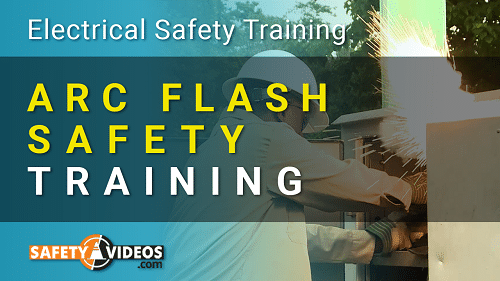
This arc flash training video will help keep your employees who work around electricity safe on the job. Arc hazards present a real and potentially fatal threat to employees working around electricity, which is why this arc flash training course is so important. The arc flash hazard is why the National Fire Protection Association publishes NFPA 70E, the Standard for Electrical Safety in the Workplace. OSHA has not adopted NFPA 70E as a regulation, but its interpretation letters treat it as the recognized way to meet the electrical safety-related work practice rules in 29 CFR 1910 Subpart S.
This arc flash safety training video supports your electrical safety program while helping prevent the devastating burns and injuries an arc flash causes.
Key Concepts Covered in This Arc Flash Training Program:
What is the difference between an arc flash and an electrical shock?
- Why is it important to inspect tools and extension cords before plugging them in?
- What is an arc flash? (When electricity “jumps” through the air from contact to contact or from contact to ground)
- What is NFPA 70e, and why is it important to help protect workers and electrical equipment and provide the basis for any workplace electrical safety program?
- What is an arc flash burn, and how can it be prevented?
- What should you do in case of an arc flash accident?
- What is an arc flash hazard analysis?
- Why should you never remove the ground plug from a 3-prong plug?
- Using a metal ladder versus using fiberglass or wooden ladders, which don’t conduct electricity
- Where do most arc flash injuries occur?
- What are the leading causes of arc flash accidents, and how can they be avoided?
- What is an arc blast, and how is it different from an arc flash?
More Topics Covered in This Arc Flash Training Course:
- What are the key components and best practices of any electrical safety programs or electrical safety training done by your company?
- What are the dangers of an employee getting hit with an arc blast? (Blindness, burns, hearing loss and more)
- What is arc-rated protective clothing, and when should these be used?
- How does an employee calculate the arc rating of a job they are working on in order to select the proper clothes, gloves, safety glasses, etc?
- What types of personal protective equipment or PPE should be used to prevent arc flash injuries and accidents?
- What are the arc flash hazards and NFPA guidelines that you and your employees need to understand?
- Why is it important to de-energize and lockout and tagout equipment before you work on it?
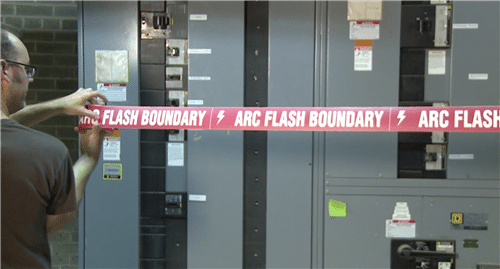
- How to create an “electrically safe working condition” by creating an “arc flash boundary.”
- What is the role of authorized versus affected employees when it comes to electrical work?
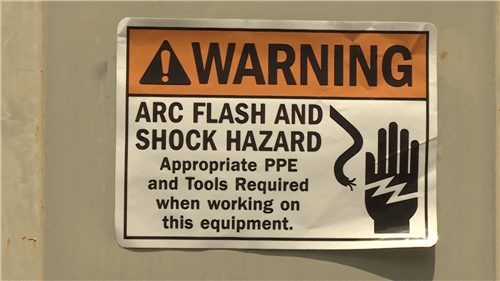
- How to clearly label and set up an arc flash boundary
- and much more…
Keeping your employees safe from arc flash dangers will go a long way in keeping them safe and protecting your bottom line. Occupational safety and regulatory compliance help both the employer and employee alike. Making this arc flash training video part of your electrical safety training program will help you maintain OSHA compliance and keep your employees safe, healthy, and happy. Our NFPA 70E training for general industry covers the standard behind the arc-flash boundary and PPE rules in full and pairs with this video.
This arc flash training video is 20 minutes long and available in English or Spanish. It is also available in a DVD or USB Stick format. We can also deliver this arc flash training online as a standalone training course or as part of a larger online safety training library.
This Complete Arc Flash Safety Training Program Includes These Items:
- Full-length arc flash training video (20 minutes, English or Spanish)
- Employee quiz and answer sheet
- A “Presenter’s Guide” if you are going to do this training in person
- A printable training sign-in sheet to keep track of your training program
- An editable Certificate of Completion (add the employee’s name and training date) that you can reuse for every session
Arc Flash Training Video – Full Length Preview:
Arc Flash Training Requirements: Who Needs It, What It Covers, and How Often
OSHA does not use the words “arc flash training” anywhere in its general industry rules, but it requires the training all the same. Under 29 CFR 1910.332, every employee who faces a risk of electric shock that the installation itself does not reduce to a safe level must be trained in the safety-related work practices of Subpart S, with additional training for qualified persons and a separate list for unqualified persons. 1910.333 requires live parts to be de-energized before work unless the employer can show that is infeasible, and 1910.335 requires electrical protective equipment matched to the work, including eye and face protection wherever there is danger of injury from electric arcs or flashes. OSHA has not adopted NFPA 70E as a regulation; its interpretation letters say the standard can be used as evidence of a recognized hazard and a feasible way to abate it under the General Duty Clause. That is why NFPA 70E, the National Fire Protection Association’s Standard for Electrical Safety in the Workplace, is where the arc flash specifics live: the arc flash risk assessment, the arc flash boundary, equipment labels, the arc-rated PPE categories, and the training rules in Article 110.
Anyone who works on or near energized electrical equipment needs the training, at a level that matches their exposure.
- Qualified persons, the electricians, maintenance technicians and engineers who work inside the arc flash boundary, must be trained to recognize the hazards, read the arc flash label, select the PPE it calls for, and demonstrate that they can do it.
- Unqualified persons, from machine operators and HVAC installers to custodial staff who work around panels and switchgear, must be trained on the boundaries they may not cross and the practices that keep them safe.
This program is written for both groups, which is why the same 20-minute video works for a maintenance department and for a plant-wide safety meeting.
NFPA 70E requires retraining at intervals not to exceed three years, and sooner when an audit or supervision shows an employee is not following the practices, when new equipment, technology or procedures are introduced, or when a job changes; it also requires the employer to document the training with its content and date. There is no arc flash certification that OSHA issues or accepts in place of that record. What an inspector looks for is the documented training, the employer’s written determination of who is qualified, and the labels and PPE the risk assessment produced. This kit supports those requirements with the video, an employee quiz and answer sheet to document understanding, a presenter’s guide for the person leading the session, a sign-in sheet, and a Certificate of Completion you can edit with each employee’s name and training date and reuse for every session and every refresher. One purchase covers every employee at your facility; there are no per-seat fees.
FAQs on Arc Flash Training
Answered by our in-house OSHA Authorized Trainer – Jason Hessom

Have a question for us? Call us at 800-859-1870 or Contact Us Via Email

Not just anyone can complete an arc flash study. Usually, the best choice is an experienced and skilled electrical engineer familiar with the ins and outs of IEEE 1584 and NFPA 70E.
Under 29 CFR 1910.137, rubber insulating gloves must be electrically tested before first issue and every six months after that, and again whenever their insulating value is suspect, after any repair, and after use without leather protectors. They must also be inspected for damage before each day’s use. OSHA’s Electrical eTool describes testing as often as monthly as the best practice under regular use.
OSHA’s electrical standard sets no fixed interval; it requires training in the work practices that apply to the job. NFPA 70E fills that gap: Article 110 requires retraining at intervals not to exceed three years, and sooner when supervision or an audit shows an employee is not following the practices, when new equipment, technology or procedures are introduced, or when a job changes. Document each session with its content and date; the sign-in sheet and certificate in this kit are built for that.
Under NFPA 70E an unqualified person may not cross the limited approach boundary around exposed energized conductors unless a qualified person advises them of the hazards and continuously escorts them, and an escorted person may never cross the restricted approach boundary. The arc flash boundary is the distance at which an arc could cause a second-degree burn, and anyone inside it must wear the arc-rated PPE the equipment label calls for. In practice a facility keeps unqualified employees outside every boundary, which is what this video teaches.
Category 1 – Minimum Arc Rating 4 cal/cm2
Category 2 – Minimum Arc Rating 8 cal/cm2
Category 3 – Minimum Arc Rating 25 cal/cm2
Category 4 – Minimum Arc Rating 40 cal/cm2
Qualified employees are allowed to work on or around energized parts. Therefore, they must have the electrical skills, knowledge, and experience to work with electrical hazards and potential arc flash hazards. They should be well versed in the regulations found in NFPA 70E, OSHA regulations, and IEEE 1584.
An arc flash analysis can also be called an arc flash study or arc flash risk assessment. These aim to evaluate the risk of an arc flash incident, determine the amount of energy the employee might be exposed to, and analyze how to protect the employee in case of a serious injury.
Arc flash courses can benefit any employee who works with or around electricity. Some common occupations that require training include electricians, linemen, HVAC installers, construction workers, maintenance workers, electrical engineers, janitorial staff, and others.
Yes, in substance. OSHA’s general industry electrical standard, 29 CFR 1910.332, requires training in safety-related work practices for every employee who faces a risk of electric shock, and 1910.335 requires electrical protective equipment, including eye and face protection from electric arcs or flashes. OSHA has not adopted NFPA 70E as a regulation, but it can cite the standard as evidence of a recognized hazard under the General Duty Clause, so most employers train to NFPA 70E. This kit supports those requirements; it does not by itself make anyone a qualified person.
Online arc flash courses are usually priced per seat, so the cost grows with every employee you enroll. This complete kit is $239 one time for the whole facility: a 20-minute video in English or Spanish on DVD or USB, an employee quiz and answer sheet, a presenter’s guide, a sign-in sheet and a reusable Certificate of Completion, with no per-seat fees. It is also available as an online course through our online safety training library.
14 reviews for Arc Flash Training – [Complete Safety Video Package]
![Arc Flash Training - [Complete Safety Video Package]](https://www.safetyvideos.com/wp-content/uploads/2022/02/products-15-2-150x150.png.webp)


We had a few minor issues with the english version video and also the quiz sheet but it was quickly resloved. Great customer serivce!
It’s a good video for orientation for new employees. Not too long, but long enough to get the point across.
Taught our employees about the dangers of arc flashes. For a group of electricians, this is an important topic that requires training.
Essential for understanding arc flash risks. Our employees got a lot out of the training for sure
A must-have training for anyone working around electricity.