
Types of Respirators and When to Use Them


If you’ve ever walked a job site, toured a chemical plant, or managed a crew doing demolition work, you’ve probably seen workers wearing some kind of respiratory protection. But there’s a big difference between grabbing whatever mask is sitting in the supply cabinet and actually choosing the right respirator for the job. That distinction matters — not just for OSHA compliance, but for keeping people breathing safely for the rest of their lives.
This guide breaks down the major types of respirators, what they protect against, and when each one is appropriate. Whether you’re a safety manager building out a respiratory protection program or a worker trying to understand the equipment you’ve been issued, this is a solid place to start.
As an OSHA Authorized Trainer, I’ve delivered respirator training to engineering, painting, and plumbing crews at hotel properties across North America. One thing I can tell you from standing in front of those groups: most workers are genuinely surprised by how much there is to know. The question I hear most often — usually within the first ten minutes — is some version of “isn’t a mask just a mask?” It’s not. And by the time training is over, people get that. That shift in understanding is exactly what this article is designed to help with.
If you are looking for training for your employees on respiratory protection, our full-length training package is what you are looking for.
Why Respirator Selection Matters More Than You Think
Every year, millions of American workers are exposed to airborne hazards — dust, fumes, vapors, gases, biological agents, and more. According to OSHA, occupational lung diseases are among the most prevalent work-related illnesses in the country, and many of them are entirely preventable with proper respiratory protection.
The challenge is that not all respirators are created equal. A dust mask that’s fine for mowing your lawn offers virtually no protection in a paint booth full of solvent vapors. A half-face respirator with the wrong cartridge is barely better than nothing when you’re working around hydrogen sulfide. Picking the wrong respirator isn’t just a paperwork problem — it’s a health risk that can take years to show up in the form of chronic lung disease, cancer, or neurological damage.
The Two Big Categories: Air-Purifying vs. Supplied-Air
Before diving into specific types, it helps to understand the fundamental split in respiratory protection.
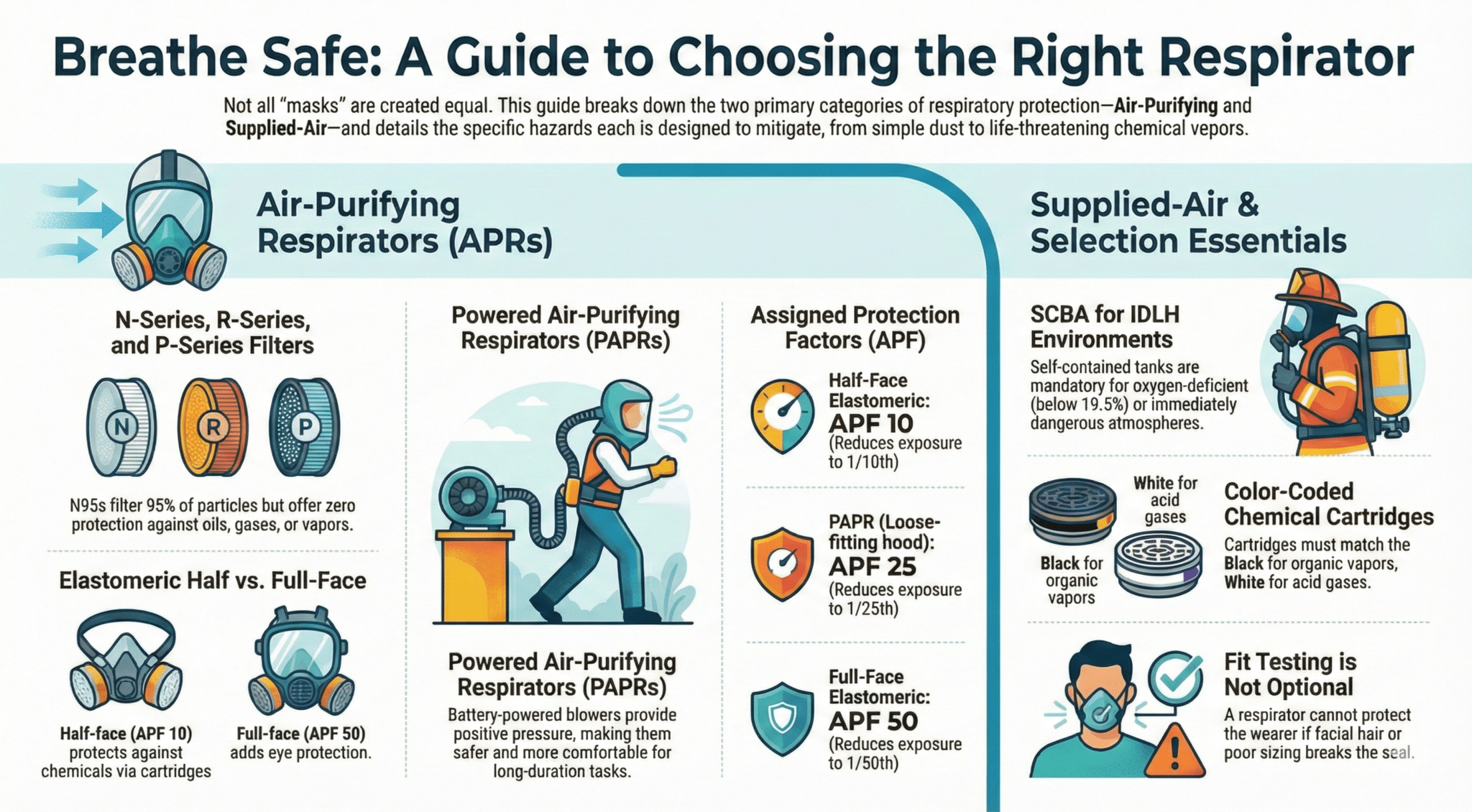
Air-purifying respirators (APRs) work by filtering or chemically treating the ambient air before the wearer breathes it. They don’t produce oxygen — they just clean what’s already there. That means they can only be used when the atmosphere contains sufficient oxygen (generally at least 19.5%) and the contaminant concentration is within the device’s rated capacity.
Supplied-air respirators (SARs) deliver clean breathing air from an external source — either a tank the worker carries or a fixed airline system. These are used in oxygen-deficient environments or when contaminant levels are so high that no filter-based solution can keep up.
Most workplaces deal primarily with air-purifying respirators, so that’s where we’ll spend the most time. But supplied-air systems are critical in confined space work, certain firefighting scenarios, and high-hazard industrial settings.
Types of Air-Purifying Respirators
Disposable Filtering Facepiece Respirators (FFRs)

These are the most commonly recognized respirators — the N95 mask became a household name during the COVID-19 pandemic, but it’s been a staple of workplace safety programs for decades.
Filtering facepieces cover the nose and mouth and rely on a filter material built directly into the mask itself. NIOSH (the National Institute for Occupational Safety and Health) rates these devices based on their filtration efficiency and resistance to oil-based aerosols:
- N-series (N95, N99, N100): Filters out 95%, 99%, or 99.97% of airborne particles; not oil resistant
- R-series (R95): Oil resistant; suitable for up to 8 hours of use with oil-based aerosols
- P-series (P100): Oil proof; the highest level of particle filtration available in this category
The number tells you the minimum filtration efficiency. An N95 filters at least 95% of airborne particles 0.3 microns and larger — which covers a wide range of dust, mist, and biological hazards.
When to use them: Woodworking dust, concrete dust, agricultural environments, healthcare settings with airborne infectious disease risk, welding fumes (with the right rating), and other particulate hazards. They are not appropriate for gases, vapors, or oxygen-deficient spaces.
Half-Face Elastomeric Respirators

Step up from a disposable and you’re looking at a reusable rubber or silicone facepiece that covers the nose and mouth. The key difference is that these use replaceable cartridges and filters, which means you can tailor the protection to the specific hazard.
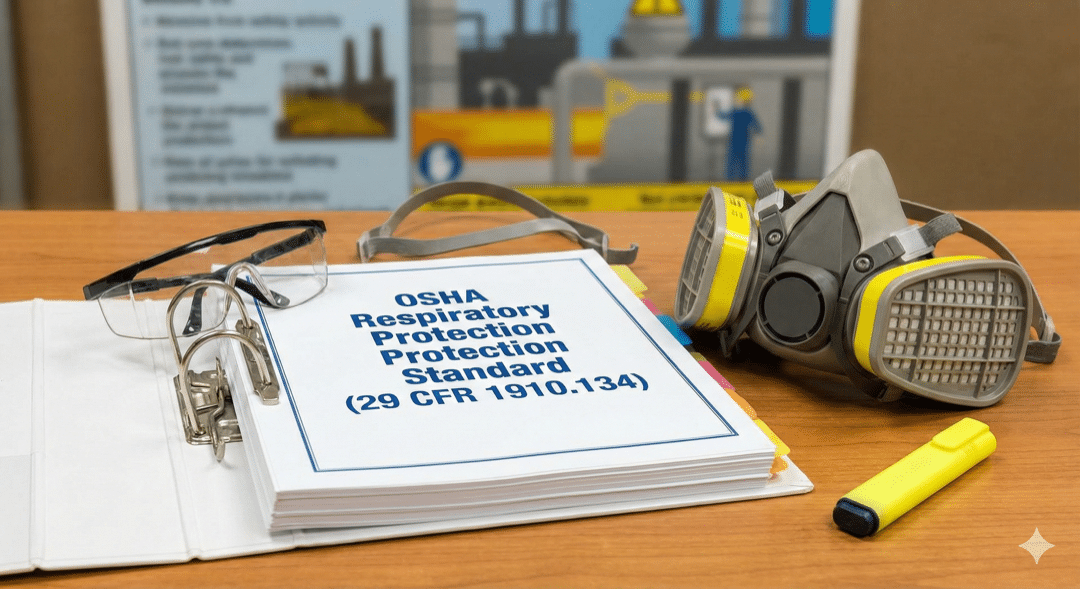
Half-face respirators create a tighter seal than disposables and are more durable for frequent use. They do require a proper fit test and medical evaluation under OSHA’s respiratory protection standard (29 CFR 1910.134).
Cartridges are color-coded by the type of hazard they address:
- Organic vapor cartridges (black): Solvents, paints, lacquers, cleaning agents
- Acid gas cartridges (white): Chlorine, hydrogen chloride, hydrogen fluoride
- Mercury vapor cartridges (orange): Specific mercury applications
- Combination cartridges: Multiple hazards in a single cartridge
Particulate filters are added in addition to — or sometimes instead of — chemical cartridges when dust or mist is also present.
When to use them: Painting, spray coating, chemical mixing, pesticide application, light to moderate industrial chemical exposure. The assigned protection factor (APF) for a half-face respirator is 10, meaning it reduces your exposure to 1/10th of what’s in the surrounding atmosphere.
In my training sessions with hotel painting crews, the half-face elastomeric with an organic vapor cartridge comes up almost every time. Painters are often working in guest rooms, stairwells, and mechanical spaces with minimal ventilation — exactly the conditions where solvent vapors from paints and coatings can build up fast. I’ve had painters tell me they’d been using a basic dust mask for years because “that’s what was in the supply room.” A dust mask does nothing for vapors. Getting crews to understand that distinction — and make sure their employer is stocking the right cartridges — is one of the most practical outcomes of a solid training session.
Full-Face Elastomeric Respirators
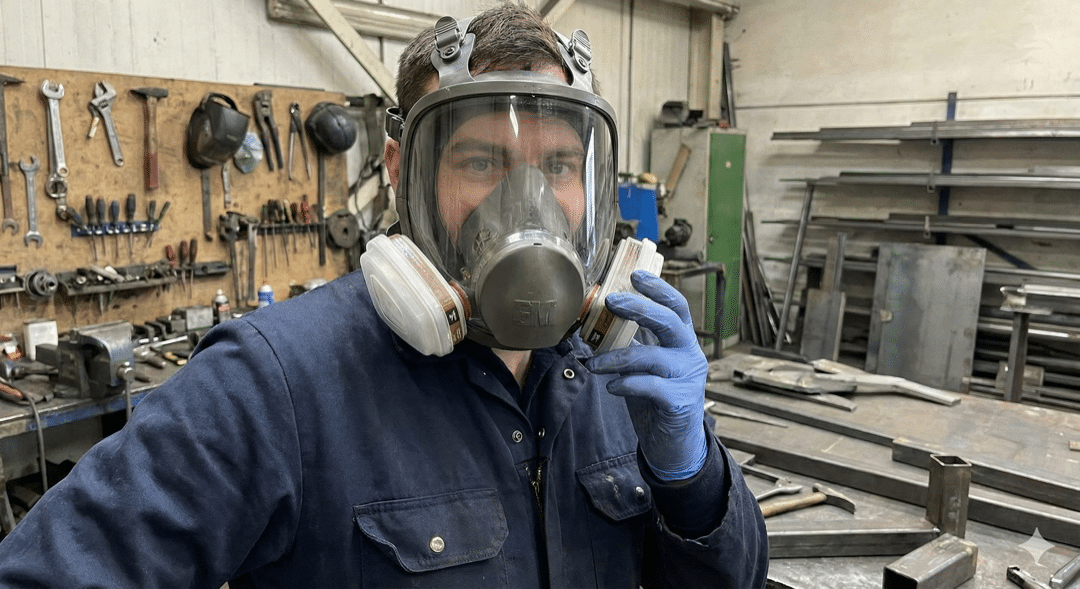
Same concept as the half-face, but the facepiece extends to cover the eyes as well. This matters in two situations: when the hazard can also irritate or damage the eyes (many vapors and gases fall into this category), and when you need a higher level of protection.
Full-face respirators have an APF of 50 — five times greater than their half-face counterparts. They use the same cartridge system, so selecting the right cartridge for the contaminant is equally important.
When to use them: Higher-concentration chemical exposures, environments where eye irritation or damage is a risk, situations where a half-face respirator doesn’t bring exposure below permissible limits. Common applications include chemical plant operations, asbestos abatement (with appropriate P100 filters), and lead abatement work.
Powered Air-Purifying Respirators (PAPRs)
A PAPR takes the concept of an air-purifying respirator and adds a battery-powered blower that pulls air through the cartridge or filter and delivers it to the wearer under positive pressure. Instead of the wearer’s lungs doing the work of pulling air through a filter, the motor does it.
This has a few advantages: it’s easier to breathe in, and the positive pressure inside the hood or facepiece means any leak goes outward rather than inward — which is how positive-pressure devices provide a higher level of protection. PAPRs using loose-fitting hoods have an APF of 25; those with tight-fitting facepieces can reach an APF of 1,000.
PAPRs also accommodate workers who have trouble getting a good seal with a standard facepiece due to facial hair, facial structure, or certain medical conditions.
When to use them: Healthcare settings dealing with high-risk infectious disease, industrial environments with high particulate loads, asbestos and silica work, pharmaceutical manufacturing. They’re bulkier and require battery management and maintenance, but they significantly improve comfort during long-duration tasks.
Types of Supplied-Air Respirators
Self-Contained Breathing Apparatus (SCBA)
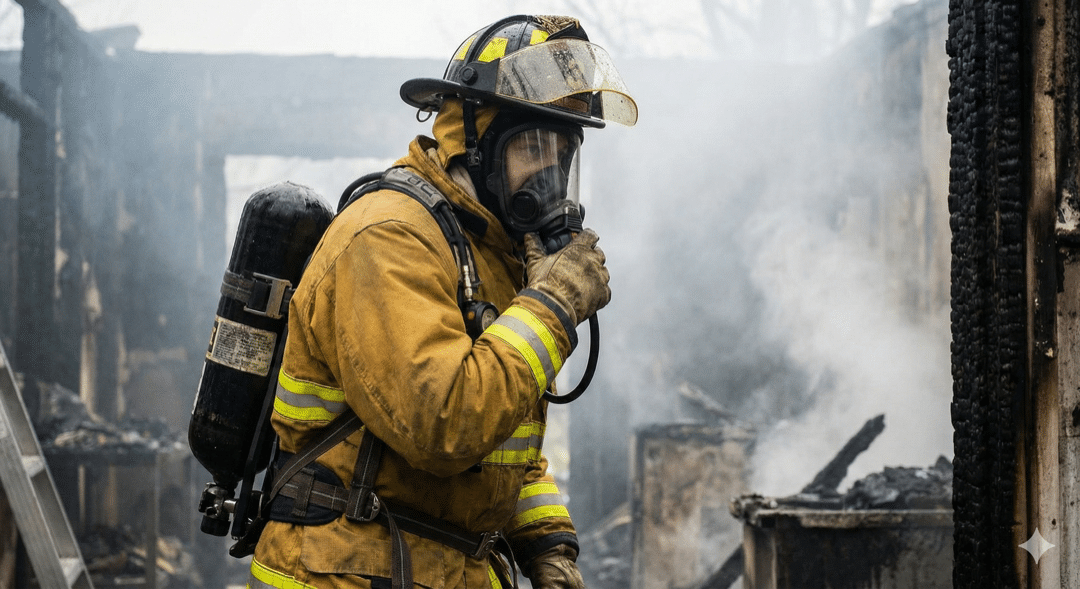
An SCBA is what firefighters wear into burning buildings — a full-face mask connected to a tank of compressed air carried on the worker’s back. It provides the highest level of respiratory protection available and is completely independent of the surrounding atmosphere.
SCBAs are rated for 30 or 60 minutes of air supply under normal working conditions, though strenuous activity burns through the supply faster.
When to use them: IDLH (immediately dangerous to life or health) atmospheres, confined space rescue, fire suppression, hazmat response, and any environment where the contaminant type or concentration is unknown. SCBA is the go-to when conditions are severe enough that you cannot afford any margin for error.
Airline Respirators (Supplied-Air Respirators)
These work similarly to SCBA but instead of carrying a tank, the worker is connected by a hose to a fixed or portable air supply. This allows for longer work duration without the weight of a tank, but it tethers the worker to the air source and limits mobility.
Airline respirators can be used with tight-fitting half or full-face masks, or with hoods and helmets. They’re common in long-duration confined space work, painting operations in enclosed areas, and certain chemical manufacturing processes.
When to use them: Extended work in confined spaces, continuous operations in high-hazard environments where SCBA duration would be limiting, and situations where mobility limitations are acceptable.
Key Factors in Selecting the Right Respirator
Knowing the types is only half the equation. Choosing the right one requires understanding a few additional variables:
The hazard itself. Is it a particulate, a gas, a vapor, or a combination? Some chemicals — carbon monoxide, for example — pass right through standard chemical cartridges. You need to know what you’re dealing with before you can protect against it.
Concentration levels. Every respirator has an APF. If the airborne concentration of a contaminant exceeds what that APF can bring below the permissible exposure limit (PEL), you need a more protective device.
Oxygen content. Below 19.5% oxygen, no air-purifying respirator is appropriate. Period.
Work duration and physical demand. High exertion increases breathing rate, which affects both filter life and how quickly a supplied-air tank depletes.
Fit. A respirator that doesn’t seal properly isn’t providing the protection you think it is. OSHA requires fit testing for all tight-fitting respirators — and that’s not a box-checking exercise, it’s a genuine safety measure. In my experience training hotel engineering and plumbing crews, fit testing is almost always the step that surprises people the most. Workers who’ve been wearing respirators for years sometimes discover during a proper fit test that their mask was never sealing correctly — usually because of facial hair, an old or worn-out facepiece, or simply the wrong size. The fit test doesn’t take long, but what it reveals can be eye-opening.
The Bottom Line
Respiratory protection isn’t one-size-fits-all, and “we have masks available” doesn’t constitute a respiratory protection program. OSHA’s standard (29 CFR 1910.134) requires a written program, medical evaluations, fit testing, training, and proper maintenance — and for good reason.
After years of delivering this training to hotel workers across engineering, painting, and plumbing departments, the thing that sticks with me is how willing people are to learn when the information is presented clearly and practically. These aren’t workers trying to cut corners — they’re often workers who genuinely didn’t know there was a corner to cut. When someone walks out of a training session and says “I had no idea that mask I’ve been wearing doesn’t protect against vapors,” that’s the whole point. That’s the conversation that might spare them a serious health problem down the road.
The hazards covered in this article are real and serious, but they’re manageable with the right knowledge, the right equipment, and a culture that takes the program seriously.
If your team needs foundational training on respiratory protection — including OSHA compliance requirements, proper donning and doffing procedures, and cartridge selection — workplace safety training videos can go a long way toward making that knowledge stick across your entire workforce.
