
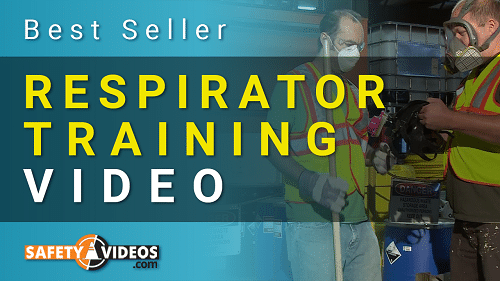
Respiratory Protection Safety Training – [Complete Video Kit]
$239

Does your team really know how to use a respirator — or do they just know how to put one on?
There’s a difference. Choosing the wrong respirator type, skipping a user seal check, or using an expired filter cartridge can be just as dangerous as wearing no protection at all. OSHA’s Respiratory Protection Standard exists because the stakes are that high: lung disease, silicosis, various cancers, oxygen deprivation, and in extreme cases, death.
This training program goes beyond the basics. It explains not just what employees need to do, but why each step matters. That understanding is what drives real compliance out on the floor, every day.
WHAT EMPLOYEES WILL LEARN:
- Identify common airborne workplace hazards — including harmful gases like hydrogen sulfide and carbon monoxide, lead and silica dusts, solvent vapors, and metal fumes — and understand what they do to the body
- Understand OSHA’s Respiratory Protection Standard (29 CFR 1910.134) and what it requires of both employers and employees
- Tell the difference between air-purifying respirators (APRs) and atmosphere-supplying respirators (ASRs), and know when each type is required
- Select the correct respirator and filter cartridge for specific job hazards — and understand why the wrong cartridge offers zero protection
- Perform positive and negative pressure user seal checks before every use
- Understand qualitative and quantitative fit testing and what factors can break a respirator seal — including facial hair, scars, dentures, and eyeglasses
- Inspect a respirator for damage before putting it on
- Properly clean, maintain, and store respirators using OSHA-approved procedures
- Work safely inside a hazardous environment and recognize when to exit immediately
COURSE TOPICS:
Respiratory Hazards and Health Risks The training opens by making the risks concrete. Employees learn exactly which airborne contaminants they could encounter on the job and — critically — what those substances actually do to the human body. Some cause immediate poisoning or disorientation. Others displace oxygen, creating environments where a worker can lose consciousness within minutes. Long-term exposures can lead to asbestosis, silicosis, lung cancer, and other serious diseases. Understanding these risks is what motivates real compliance.
OSHA’s Respiratory Protection Standard Employees get a plain-language overview of what OSHA requires under 29 CFR 1910.134. They’ll learn what their employer must do — identify respiratory hazards, implement engineering controls, and develop a written respiratory protection program — and what protections OSHA guarantees for them, including free medical evaluations and no-cost respirator equipment.
Types of Respirators This section removes the confusion around respirator categories. The training covers disposable masks and their filter efficiency ratings (including N95), half-mask and full-face air-purifying respirators, particulate respirators, gas and vapor respirators with chemical sorbent cartridges, and combination respirators. It also explains when an atmosphere-supplying respirator is required — covering both Supplied Air Respirators (SARs) and Self-Contained Breathing Apparatus (SCBAs) — and the key differences between the two.
Filter Selection and Color Codes This is one of the most misunderstood — and most dangerous — areas of respirator use. The program explains how filter cartridges are color-coded and labeled for specific contaminant families, and drives home the critical rule: using the wrong filter is the same as wearing no filter at all. Employees learn to verify their cartridge before entering any hazard zone.
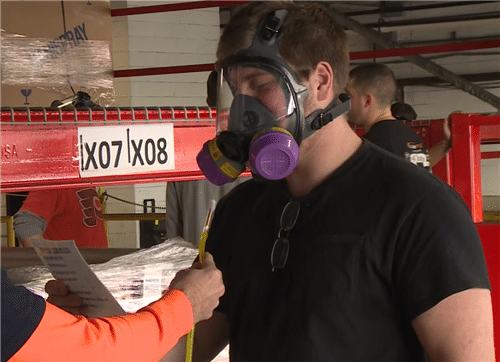
Fit Testing and User Seal Checks Employees learn the difference between qualitative and quantitative fit testing, and why initial fit testing alone isn’t enough. The video walks step-by-step through both the positive pressure and negative pressure user seal check procedures that every worker must perform every time they put on a tight-fitting respirator.
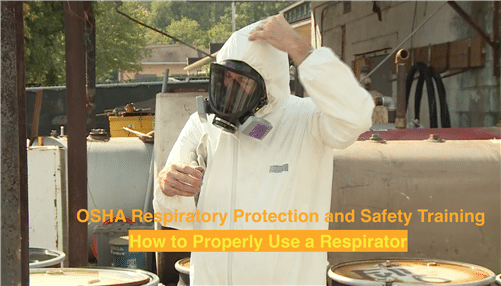
Safe Work Practices Behavioral compliance matters as much as equipment compliance. Employees learn never to remove or reposition their respirator inside a hazardous area, how to recognize signs of heat exhaustion while wearing an atmosphere-supplying respirator, and exactly when to leave a hazard zone.
Inspection, Cleaning, and Storage A respirator that isn’t maintained is a respirator that will eventually fail. The program covers the full OSHA-approved cleaning procedure — disassembly, washing, rinsing, drying with a lint-free cloth, reassembly, and post-cleaning seal check — along with proper storage practices and notes on specialized cleanup for lead- and asbestos-contaminated equipment.
WHY THIS TRAINING MATTERS:
OSHA respiratory violations are among the most frequently cited in workplace inspections. Beyond compliance, respiratory diseases are a leading cause of long-term workers’ compensation claims. The cost of this training is a fraction of a single OSHA citation — and nothing compared to the human cost of a preventable illness.
WHO NEEDS THIS TRAINING:
- Manufacturing and industrial facilities
- Construction and demolition
- Welding and metalworking
- Chemical processing and paint facilities
- Healthcare and laboratory environments
- Hazmat and environmental remediation
- and many others….
Keeping your employees’ respiratory health in good order is your responsibility. This respiratory protection training video will help you do just that. This 21-minute training video is available in both English and Spanish versions and is delivered on either a DVD or a USB Stick. We also offer online training, either as a standalone course or as part of a larger training library, if you need it.
This Complete Respirator Safety Training Program Includes These Items:
- Full-length respiratory safety training video
- Employee quiz and answer sheet
- A “Presenter’s Guide” if you are going to do this training in person
- A printable training sign-in sheet to keep track of your training program
- A printable Certificate of Completion. You can print as many copies of the Certificate as you need
Respirator Training Video – Full Length Preview:
FAQs on Respiratory Protection Training
Answered by our in-house OSHA Authorized Trainer – Jason Hessom

Have a question for us? Call us at 800-859-1870 or Contact Us Via Email
This program is designed to address the content requirements of 29 CFR 1910.134. It covers all the core training elements OSHA requires — hazard identification, respirator selection, fit testing, seal checks, maintenance, and safe work practices. It should be paired with your site-specific procedures to fully satisfy your written respiratory protection program requirements.. It covers all the core training elements OSHA requires — hazard identification, respirator selection, fit testing, seal checks, maintenance, and safe work practices. It should be paired with your site-specific procedures to fully satisfy your written respiratory protection program requirements.
If you are purchasing the USB or DVD version, there are no per-seat fees. One purchase covers your entire organization, whether you’re training five employees or five hundred.
The quiz verifies comprehension of the key concepts in the video — respirator types, filter selection, seal check procedures, fit testing, and maintenance. Completed quizzes can serve as documentation that training was conducted and understood.
15 reviews for Respiratory Protection Safety Training – [Complete Video Kit]
![Respiratory Protection Safety Training - [Complete Video Kit]](https://www.safetyvideos.com/wp-content/uploads/2022/02/products-69-2-150x150.png.webp)


Happy
Practical safety tips when it comes to respirators
Exactly what we needed
This is an important part of our overall safety training program.