
Respirator Fit Testing – What Employers Need to Know


Most employers understand they need to provide respirators when workers are exposed to airborne hazards. What’s less understood — and where I see respiratory protection programs fall apart — is the fit testing requirement. A respirator that doesn’t seal properly isn’t protecting anyone. It’s just a piece of equipment the employee is wearing.
Respirator fit testing is one of those topics that seems technical on the surface but is fundamentally about one thing: making sure the device actually works for the person wearing it. This article breaks down what OSHA requires, which test methods are available, and what employers need to do to stay compliant and actually protect their workers.
If you are looking for training for your employees on respiratory protection, our full-length training package is what you are looking for.
Why Fit Testing Isn’t Optional
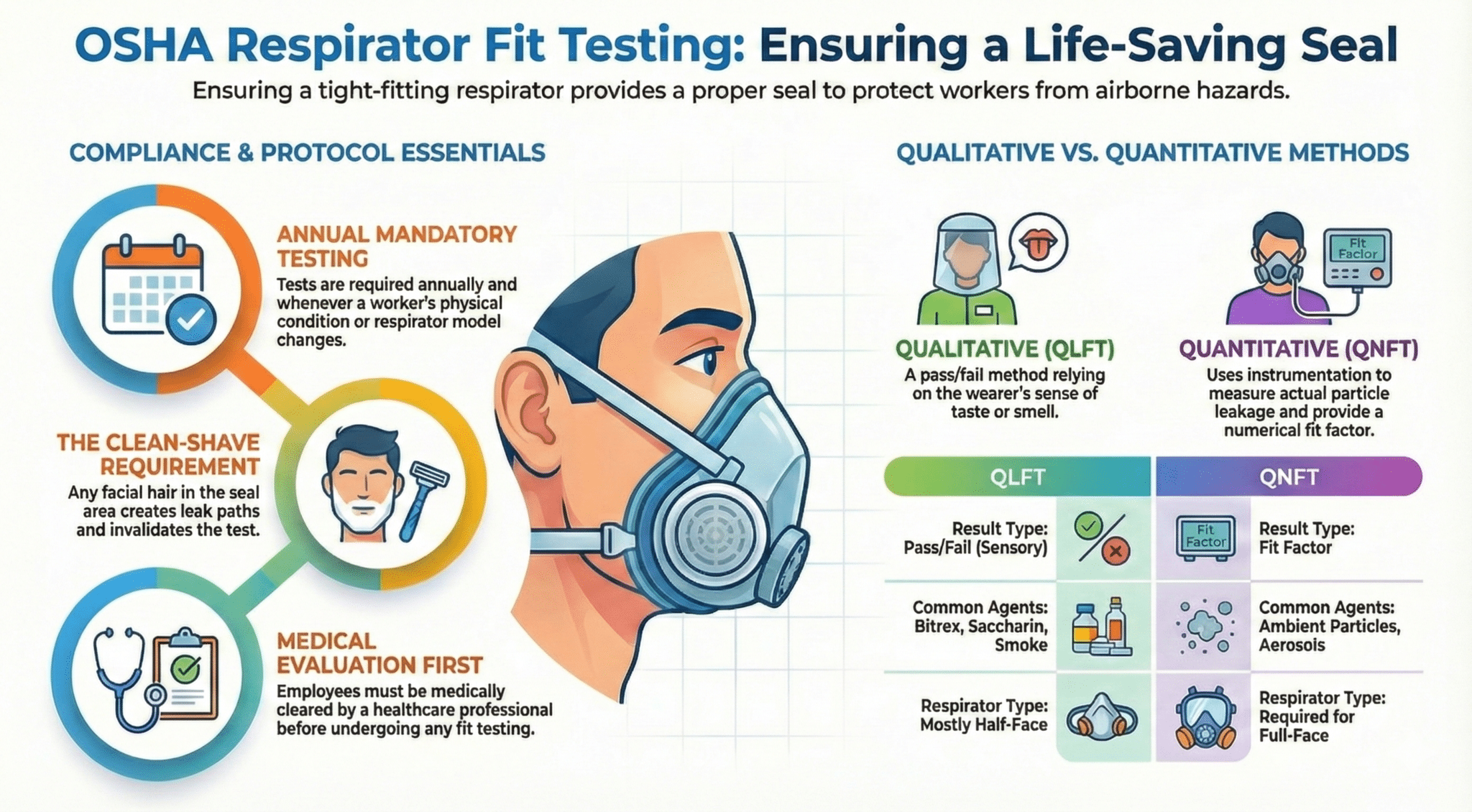
Under OSHA’s respiratory protection standard, 29 CFR 1910.134, fit testing is a mandatory component of any respiratory protection program that uses tight-fitting facepieces. That includes half-face and full-face elastomeric respirators, N95 filtering facepiece respirators, and any other tight-fitting device covered by the program. Certain topics like respirators for silica dust, asbestos, and others have very stringent requirements.
The logic is simple. Respiratory protection works by creating a sealed barrier between the wearer’s breathing zone and the surrounding atmosphere. If that seal leaks, contaminated air bypasses the filter entirely. The assigned protection factors (APFs) we use to evaluate respirators — 10 for a half-face, 50 for a full-face — assume a proper fit. Without a verified seal, those numbers are meaningless.
I’ve done fit testing with engineering and plumbing crews, and the results are always eye-opening. Workers who’ve been wearing the same half-face respirator for two or three years sometimes find out during a proper fit test that their mask was leaking the whole time. Sometimes it’s facial hair they didn’t know was a problem. Sometimes it’s just the wrong size. The test itself takes maybe fifteen minutes — the consequence of skipping it can last a lifetime.
Who Requires a Fit Test
Any employee who wears a tight-fitting respirator as part of their job duties must be fit-tested before using it in a hazardous environment. This includes:
- Workers who are newly enrolled in a respiratory protection program
- Employees who are being issued a different respirator model or size than they previously used
- Anyone for whom changes in physical condition could affect the seal — significant weight gain or loss, dental work, facial surgery, or scarring in the face seal area
OSHA also requires fit testing to be repeated at least annually. That’s a minimum. If a worker’s face shape changes, their assigned respirator changes, or you have reason to believe the seal may have been compromised, additional testing is appropriate.
One thing I want to flag here: loose-fitting respirators — including powered air-purifying respirators (PAPRs) with hoods or helmets — do not require fit testing. That’s one reason PAPRs are sometimes chosen for workers who can’t achieve a reliable seal due to facial hair or certain medical conditions. But for the tight-fitting devices that make up the majority of workplace respirators, fit testing is not optional.
The Two Types of Fit Tests
OSHA recognizes two categories of fit testing methods: qualitative and quantitative. Each has its place, and the right choice depends on the type of respirator being tested and the resources available.
1) Qualitative Fit Testing (QLFT)
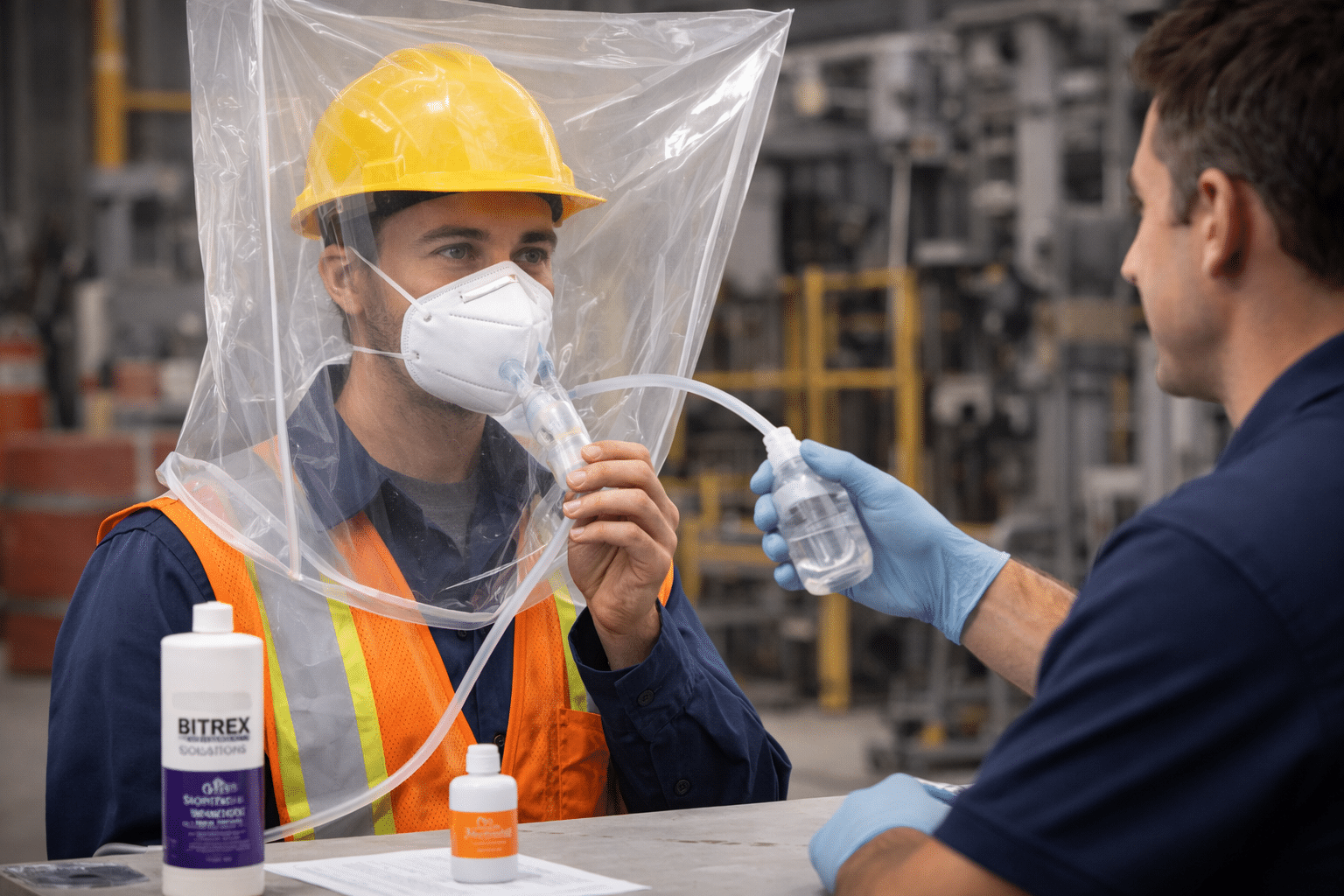
Qualitative fit testing is a pass/fail method that relies on the wearer’s sensory response to a test agent. If they can smell, taste, or detect irritation from the agent while wearing the respirator, the test fails. If they can’t detect anything, it passes.
OSHA currently approves four qualitative methods:
- Isoamyl acetate (banana oil): Used only for respirators with organic vapor cartridges. The tester introduces a banana-scented vapor around the facepiece during a series of exercises. If the wearer detects the odor, the fit has failed.
- Saccharin solution aerosol: Delivered as a sweet-tasting mist. The wearer must confirm they can taste the saccharin without the respirator before testing begins, then the test is conducted with the respirator on.
- Bitrex (denatonium benzoate) solution aerosol: Similar to saccharin but uses a bitter taste instead of sweet. Considered more reliable by some practitioners because the bitter taste is more universally detectable.
- Irritant smoke: A stannic chloride smoke that causes coughing if it reaches the wearer’s airways. Detection is involuntary, which some consider an advantage — you can’t talk yourself into thinking you didn’t smell it.
Qualitative fit testing is less expensive and doesn’t require specialized equipment beyond a test kit, which makes it practical for many employers. The limitation is that it’s subjective — it depends on the wearer’s ability to detect the test agent — and it’s generally appropriate only for half-face respirators. OSHA does not accept qualitative methods for fit testing full-face respirators in most applications.
2) Quantitative Fit Testing (QNFT)
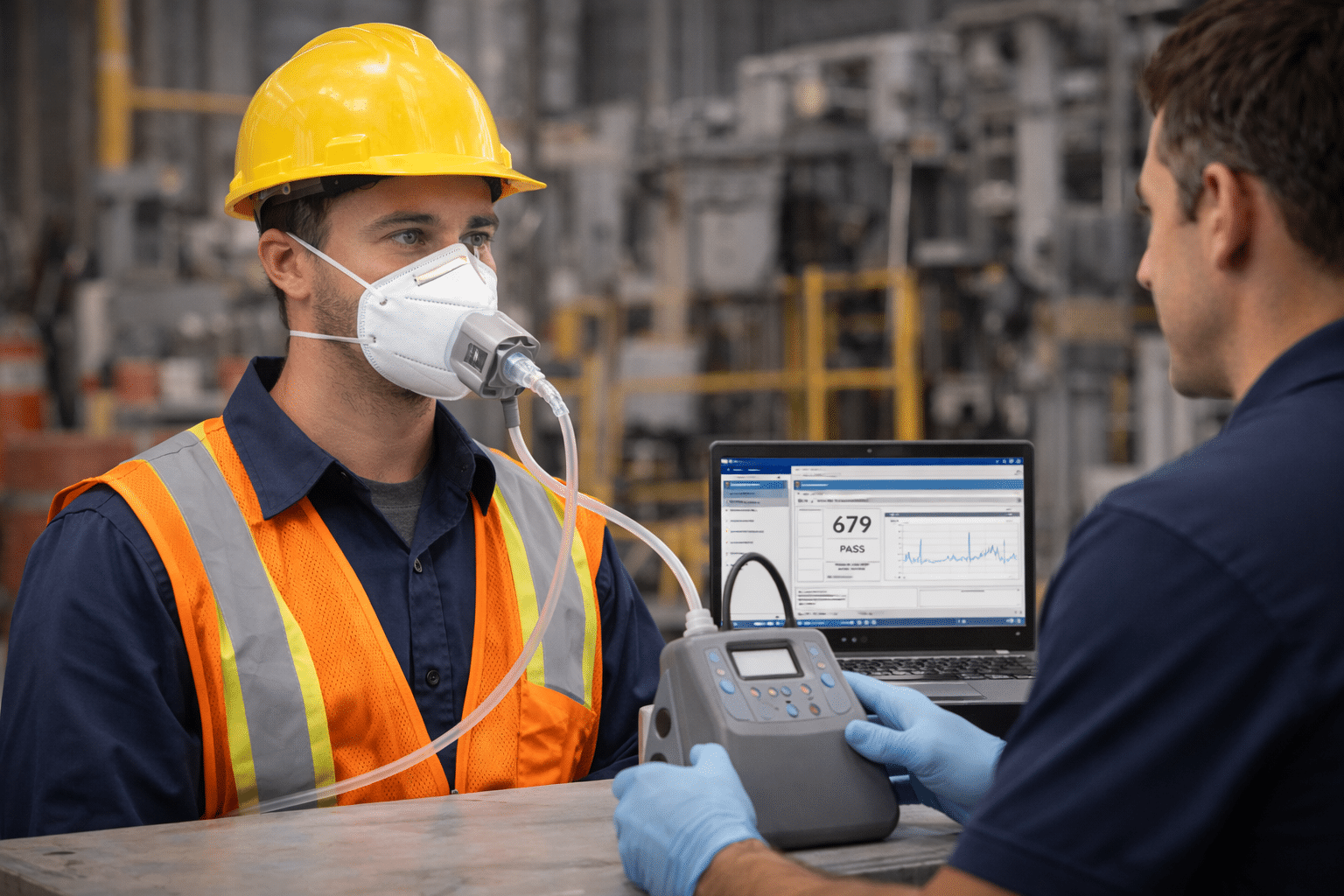
Quantitative fit testing uses instrumentation to measure the actual concentration of a test agent inside the facepiece compared to outside, producing a numerical fit factor. A fit factor of 100 or higher is required to pass a half-face respirator; a full-face device requires 500.
There are three OSHA-accepted quantitative methods:
- Generated aerosol: Ambient particles (corn oil, polyethylene glycol, or di-2-ethylhexyl sebacate) are used as test agents. Particle concentrations inside and outside the mask are measured with a photometer.
- Condensation nuclei counter (CNC): The most common quantitative method in commercial use, often seen as the PortaCount system. It measures ambient particles and generates a fit factor automatically. Accurate and widely accepted.
- Controlled negative pressure (CNP): A less common method that seals the exhalation valve and measures the pressure required to maintain a specific negative pressure inside the facepiece. Not used with positive-pressure respirators.
Quantitative testing requires more equipment and setup than qualitative testing, but it produces objective data and is required for full-face respirators used in environments with high hazard concentrations.
The Fit Test Protocol — What It Looks Like in Practice
Regardless of which method is used, OSHA requires the fit test to be performed using the same make, model, style, and size of respirator that the employee will actually wear on the job. Testing on one model and then issuing a different one defeats the purpose entirely. Also, picking the most appropriate respirator for your conditions is very important.
The standard fit test protocol includes a series of exercises designed to simulate the kinds of movements workers make on the job. These include normal breathing, deep breathing, turning the head side to side, moving the head up and down, talking, grimacing, and bending over. The idea is to challenge the seal under conditions that mimic real use.
Before any fit test, the worker needs to be clean-shaven in the face seal area. Any stubble at the seal creates a leak path that no cartridge upgrade or tighter strap tension can compensate for. This is a point of friction in some workplaces — particularly in industries where facial hair is common. The solution isn’t to skip the test or overlook the stubble; it’s to either require workers to shave for respirator use or transition them to a loose-fitting PAPR where the seal requirement doesn’t apply.
What Fit Testing Doesn’t Cover
It’s worth being clear about what a successful fit test tells you and what it doesn’t. A passing result means the specific respirator in use created an adequate seal on that worker’s face on that day. It doesn’t mean the program is complete.
Fit testing is one requirement within 29 CFR 1910.134. The full standard also requires a written respiratory protection program, a medical evaluation before fit testing begins (a worker with certain cardiac or pulmonary conditions may not be able to safely wear a respirator at all), training, proper maintenance and storage, and periodic program evaluation by a qualified administrator.
The medical evaluation piece is something employers sometimes overlook because it has to come first. Before you put a worker through a fit test, they need to complete a medical questionnaire reviewed by a licensed healthcare professional. If that step gets skipped, the whole program is out of compliance regardless of how thorough the fit testing is.
Documenting Fit Test Results
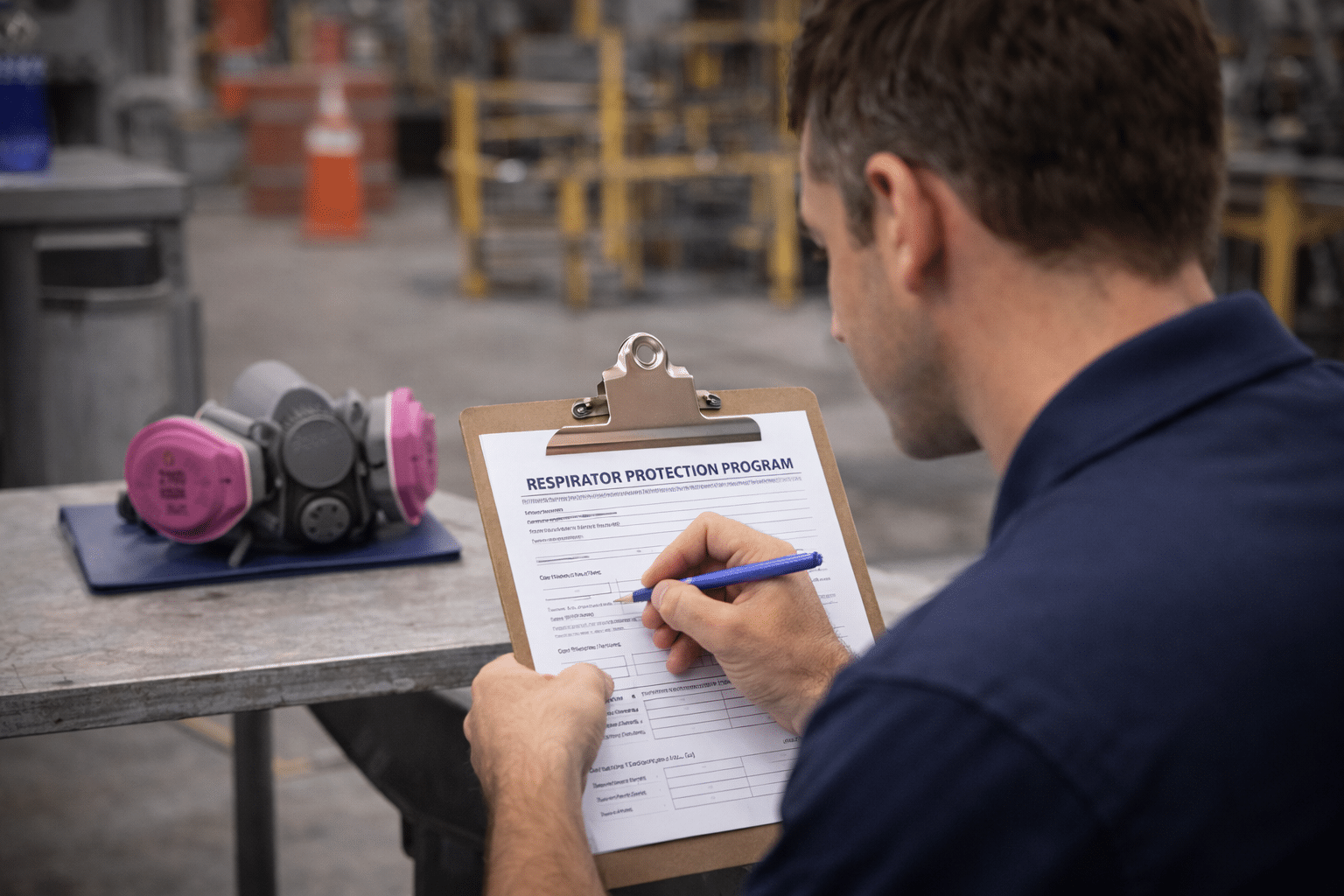
OSHA doesn’t prescribe a specific form for fit test records, but it does require that records be kept. At minimum, your documentation should include the employee’s name, the date of the test, the respirator make/model/size tested, and the test result. For quantitative tests, retain the actual fit factor. Records should be kept for the duration of the employee’s employment plus one year.
Good documentation serves you in an OSHA inspection and in the event of a worker’s comp claim or health complaint. It demonstrates that your program is being run with rigor, not just checked off a box.
The Bottom Line on Fit Testing
Fit testing isn’t a bureaucratic hurdle — it’s the step that tells you whether the respirator you’ve issued is actually doing its job. Every other element of a respiratory protection program depends on a working seal. Without verified fit, the cartridge selection, the maintenance schedule, and the training are all built on a foundation with a hole in it.
In my experience delivering respiratory protection training across several different industries, the workers who understand what fit testing actually checks for tend to take their respirator use more seriously. When they understand that the test is about their face specifically, not just respirators in general, it shifts from a compliance exercise to something personal. That shift matters.
