
Heat Stress Training – [Complete Video Kit]
$239

Heat stress is not only an important topic for OSHA training, but it’s also an important concept to teach your employees to keep them safe on the job. This heat stress training video will teach your employees how to identify heat-related illness before it happens and what to do in case they overheat.
What is Covered in this Heat Stress Training Course:
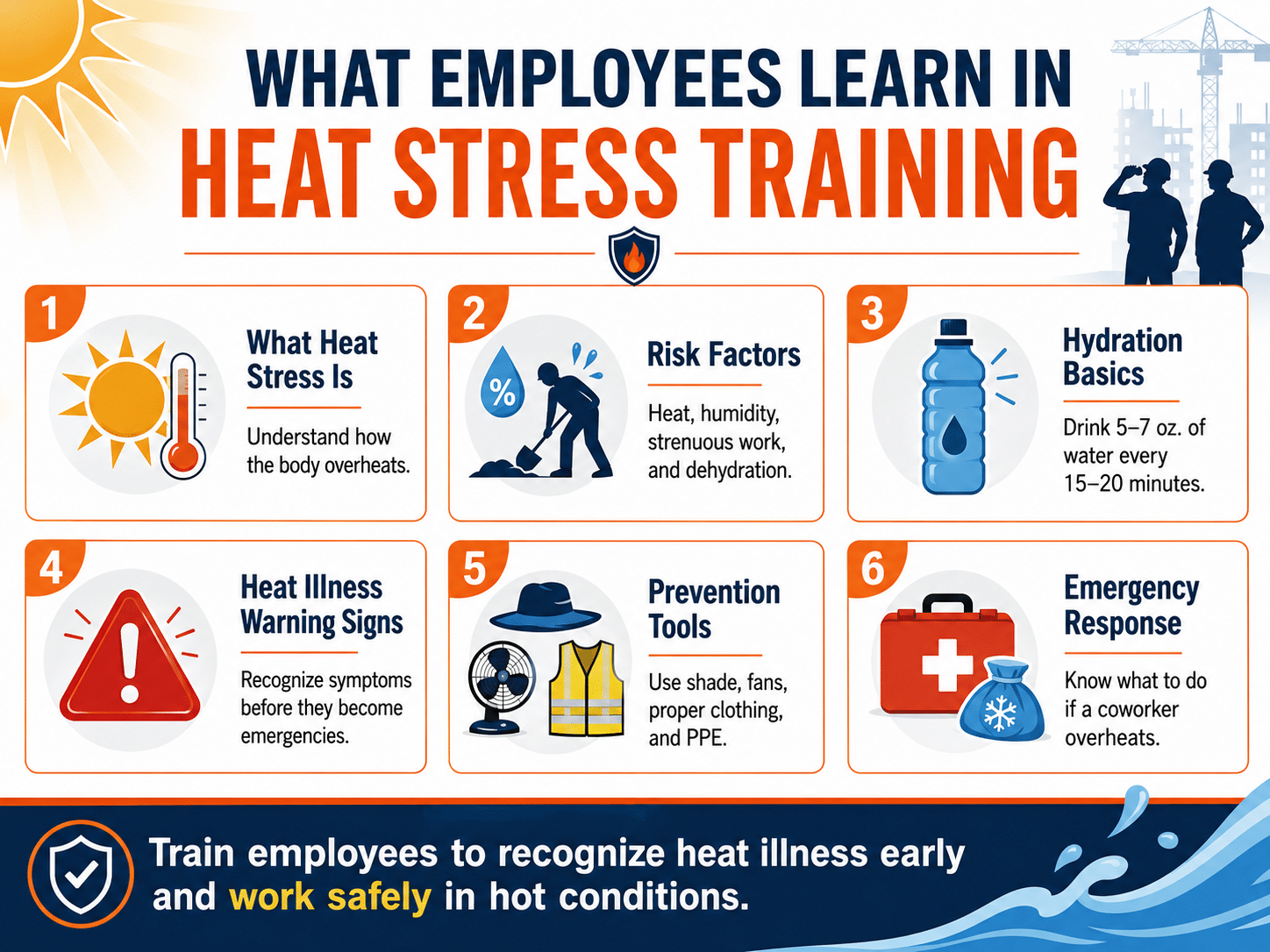
- What is “heat stress,” and how is it defined?
- What are the factors that can lead our bodies to become overheated? (the hot or humid weather, strenuous work, etc.)
- What happens to our bodies when our temperatures rise? (our bodies direct more blood flow to the surface of the skin, and it acts much like the radiator in our cars, circulating heat out of the body)
- How much can our bodies sweat in a given hour? (Up to one quart of water and electrolytes per hour. Obviously, this affects our body’s ability to fight heat exhaustion and prevent heat-related illnesses)
- How much liquid should your employees be drinking as the temperatures rise? (employees should try to drink 5 to 7 ounces of water every 15 to 20 minutes to prevent dehydration)
- What are the drinks to avoid while trying to cool your body down? (Caffeine or alcoholic drinks should be avoided because they will work to dehydrate your body in addition to the heat)
- Should we eat differently when trying to protect ourselves again heat stress? (yes, hot meals raise your body temperature, and heavy foods require more blood flow to be used for digestion which could be used to help cool you off)
- What are some of the possible heat-related illnesses? (heat syncope, heat cramps, heat exhaustion, and heat stroke are all discussed)
- What is heat illness, and how can it be avoided?
- What types of Personal Protective Equipment or PPE can be used to prevent heat stress?
- What might cause a person to faint when they overheat? (the bodies increased blood flow can cause a person to feel faint or lightheaded)
- How to recognize the symptoms of heat stress and what to do about it? (When we sweat a lot and fail to replace the fluids and electrolytes, we can experience heat cramps. Symptoms include painful cramping as well as involuntary jerking or muscle spasms, often in the calf, thigh, or shoulder). Heat stress training is critical to help employees recognize symptoms of heat stress and take action to prevent problems.
More Topics Covered In This Heat Stress Training:
- What is heat stroke, and what steps can an employee take to avoid it?
- How can an employee monitor heat stress levels?
- How can we best protect ourselves on the job from and prevent heat illness?
- How can we speed up the cooling process when our body becomes overheated? (apply cold compresses to the armpits and body, wet down clothing, use ice or cold packs, etc.)
- What actions should we take if a co-worker is showing signs of heat stroke? (get the person out of the sun and into a cooler environment, have them sit down and rest, cool them off by using a wet towel on their face and neck, and give them water to drink or sports drinks to help replace lost electrolytes)
- How does the color of our clothing affect our body’s ability to handle heat? (black or other dark colors absorb heat, you should wear light-colored clothing)
- What other items can help protect us from heat illness and sun exposure? (wear sunscreen, wear proper clothing, wear sunglasses, etc.). Also, it seems obvious, but air conditioning and fans can help cool a hot area as well and employees should be reminded of this during times of extreme heat.
- What is a heat rash, and how does it relate to excessive heat stress?
- and much more…
Providing your employees heat stress training is not only a vital OSHA training piece, it is also important to reduce your potential for on-the-job heat-related accidents or injuries. This OSHA heat stress course will teach your employees the important concepts they need to know to keep heat issues in check. This heat stress training video is available as either an English or Spanish-speaking DVD or USB Stick, and is 16 minutes in length.
Why Heat Stress Training Matters
Heat is the deadliest weather hazard American workers face, and unlike most workplace hazards it does not announce itself. A worker who is behind on fluids at 10am is already impaired by noon — slower, less coordinated, making the kind of mistakes that get logged as an unrelated accident. By the time someone is visibly in trouble, the body has often been losing the fight for hours.
It is also not just an outdoor problem. Warehouses without air conditioning, commercial kitchens, laundries, foundries, boiler rooms, bakeries, and any enclosed space with hot equipment can put workers into heat stress with no sun involved at all. OSHA’s proposed federal heat rule covers indoor and outdoor work settings alike, which reflects where the injuries actually happen.
The regulatory picture is simple to state. There is no final federal heat standard yet — OSHA enforces heat hazards under the General Duty Clause, and in April 2026 it renewed its National Emphasis Program for outdoor and indoor heat-related hazards for another five years, so heat inspections are active policy. A federal rule has been in rulemaking since 2024 with no finalization date. Several states already run their own heat illness prevention standards with specific water, rest, cooling, and training requirements. Under every one of those, documented employee training is the baseline expectation.
Training is also the cheapest control you have. Water, shade, and rest only work if employees know why they matter, recognize the early warning signs in themselves and their co-workers, and know exactly what to do when someone stops sweating. That is what this program teaches.
Who Needs Heat Stress Training:
Any employee who works where the body has to fight to stay cool — indoors or out:
- Warehouse, distribution, and manufacturing employees in non-climate-controlled facilities
- Commercial kitchen, bakery, laundry, and food-processing staff
- Foundry, boiler room, and maintenance workers around hot equipment
- Landscaping, groundskeeping, agriculture, and utility crews
- Delivery drivers and anyone loading or unloading in the summer
- Workers in heavy PPE, respirators, or protective suits, where the gear itself drives heat load
- Supervisors and safety managers responsible for a written heat illness prevention program
- New and returning employees, before their first hot shift — the highest-risk group of all
Running an outdoor construction crew? Our heat stress training for construction workers covers the same illnesses with jobsite-specific guidance on acclimatization, high-heat work, and PPE.
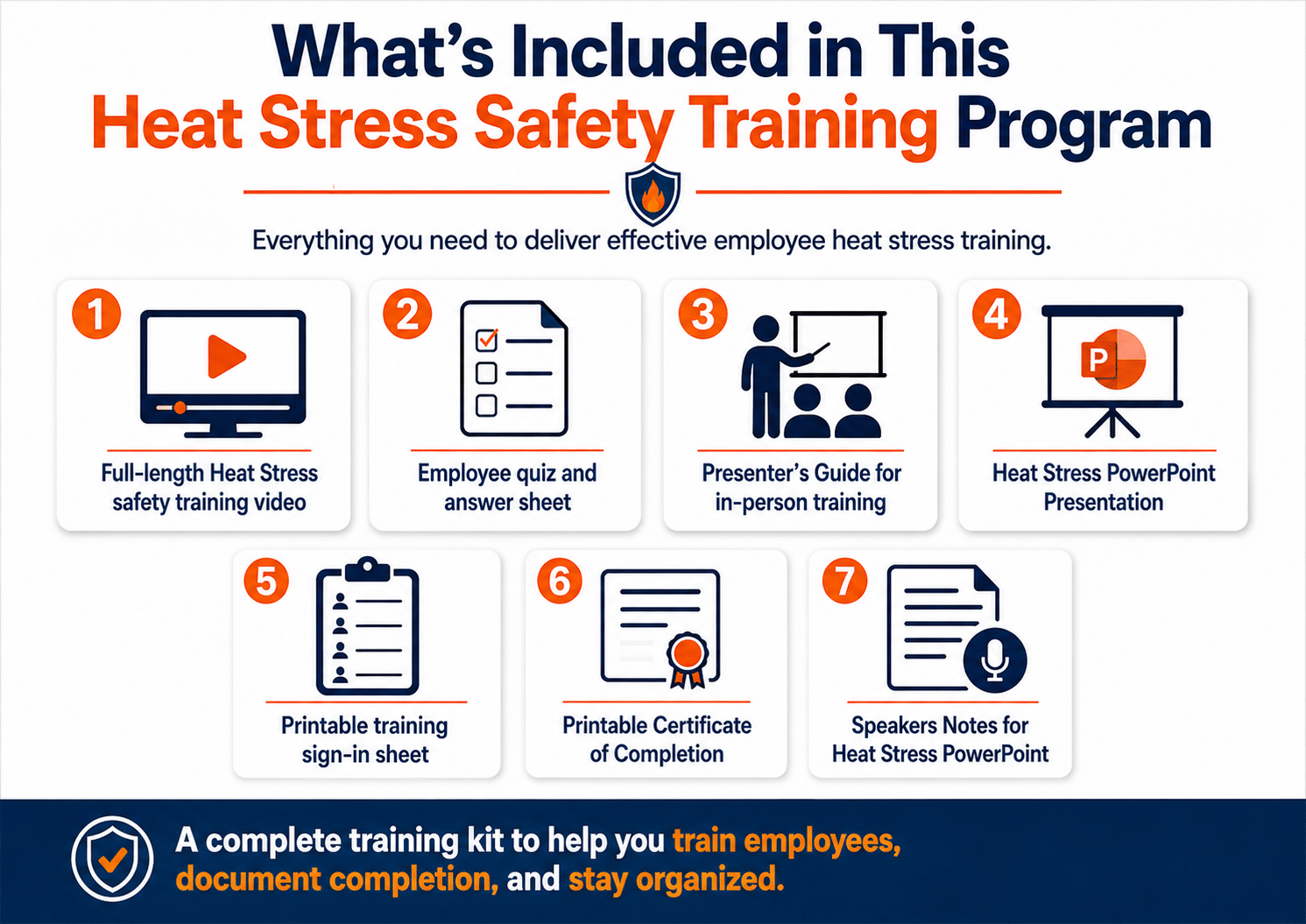
This Complete Heat Stress Safety Training Program Includes These Items:
- Full-length Heat Stress safety training video
- Employee quiz and answer sheet
- A “Presenter’s Guide” if you are going to do this training in person
- Heat Stress Powerpoint Presentation (completely editable and customizable)
- A printable training sign-in sheet to keep track of your training program
- A printable Certificate of Completion. You can print as many copies of the Certificate as you need
- Speakers Notes for Heat Stress Powerpoint
Heat Stress Training Video – Full Length Preview:
FAQs on Heat Stress Training
Answered by our in-house OSHA Authorized Trainer – Jason Hessom

Have a question for us? Call at 800-859-1870 or Contact Us Via Email
There is no final federal heat standard, but heat is very much enforced. OSHA cites heat hazards under the General Duty Clause, which obligates employers to protect workers from recognized hazards, and in April 2026 it renewed its National Emphasis Program for outdoor and indoor heat-related hazards for another five years — meaning heat-related inspections are active, funded policy. A number of states run their own heat illness prevention standards that require training outright. In practice, if your employees work in heat, documented training is the expectation under all of these.
It can be. A work-related heat illness is recordable on your OSHA 300 log if it results in medical treatment beyond first aid, days away from work, restricted duty or job transfer, or loss of consciousness — the same general criteria as any other work-related illness. A worker who faints from heat syncope or is treated for heat exhaustion at a clinic will usually meet that bar, which is one more reason to catch these cases at the cramping stage instead.
Yes, and this is the part employers most often miss. Warehouses without air conditioning, commercial kitchens, laundries, bakeries, foundries, and boiler rooms all produce heat stress with no sun involved. OSHA’s proposed federal heat rule explicitly covers indoor as well as outdoor work settings. If your people work somewhere the body has to fight to stay cool, this training applies to them.
The video covers the full range. Heat rash is the mildest signal that skin and sweat glands are overwhelmed. Heat cramps come from sweating heavily without replacing fluids and electrolytes, showing up as painful cramping or involuntary muscle spasms in the calf, thigh, or shoulder. Heat syncope is a drop in blood flow that causes lightheadedness and fainting. Heat exhaustion brings weakness, dizziness, heavy sweating, and confusion. Heat stroke is the emergency — the body stops cooling itself and organ damage follows if it is not reversed immediately.
The elements regulators and the proposed federal rule consistently point to are: drinking water available and encouraged on a schedule, access to shade or a cooled area, rest breaks that scale with conditions, a plan for acclimatizing new and returning workers, someone monitoring conditions and workers, a written emergency response procedure for suspected heat stroke, and employee training on all of it. This kit provides the training component and the documentation to prove you delivered it.
There is no federally mandated interval absent a final standard, but the practical answer is annually, before the hot season starts, plus whenever you bring on new employees. Heat safety is seasonal knowledge — a crew trained last August has largely stopped thinking about it by the following June, and new hires arrive with no exposure to your procedures at all. Most employers run it every spring and repeat it when a heat wave is forecast.
The video runs 16 minutes and is available on DVD or USB stick, in English or Spanish — short enough to run in a single safety meeting and train an entire shift at once.
20 reviews for Heat Stress Training – [Complete Video Kit]
![Heat Stress Training - [Complete Video Kit]](https://www.safetyvideos.com/wp-content/uploads/2022/02/products-14-2-150x150.png.webp)

An essential resource for safe working in heat.
Outstanding video, thoroughly covers heat stress risks and prevention methods. Essential for anyone working in hot conditions.
Invaluable for outdoor work safety.
Extremely helpful, provides detailed insights into heat stress and how to avoid it. A must-have for safety training.
Comprehensive guide to understanding and preventing heat stress in the workplace. Good price and our team liked it.